
Written by the Haody Medical Product Team | Medically reviewed for accuracy.
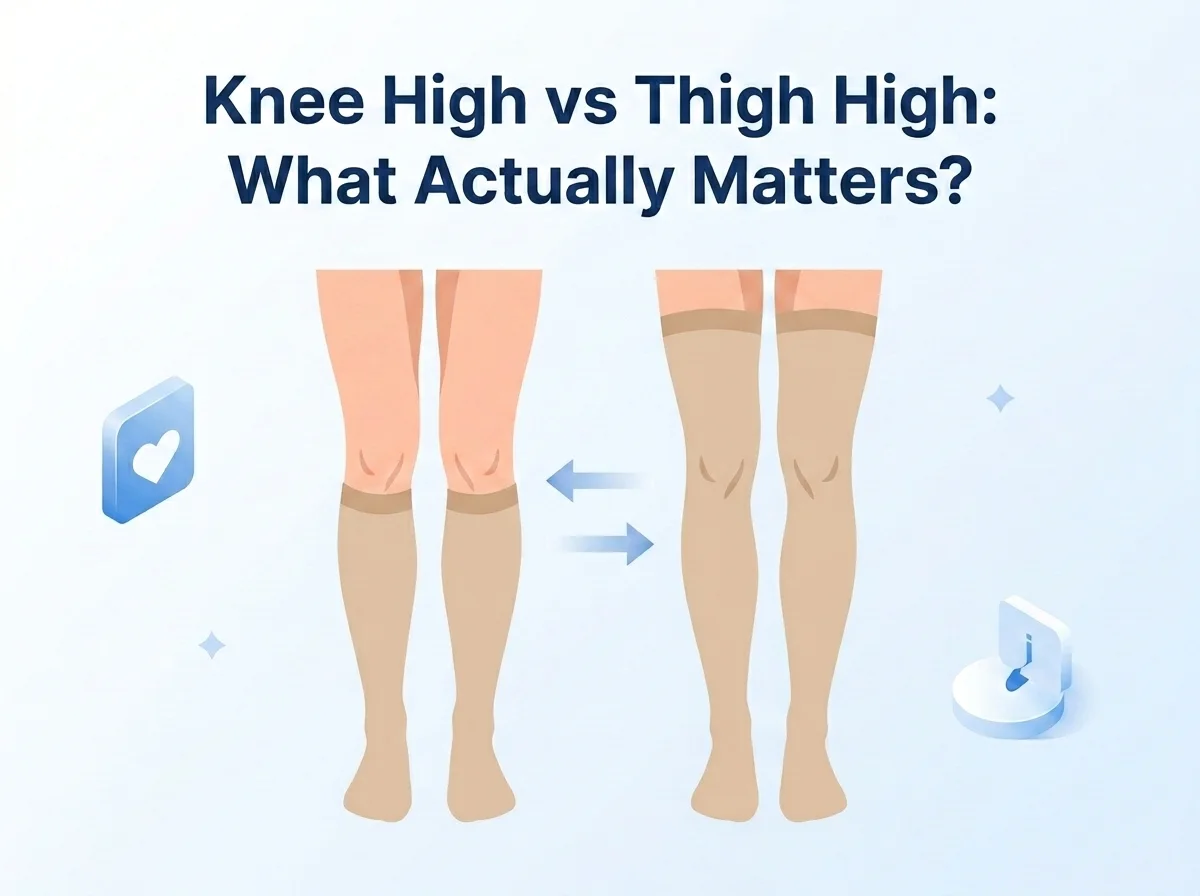
Choosing between knee high vs thigh high compression stockings?
Here’s the truth most articles won’t tell you:
The length is not what determines effectiveness. Coverage area is.
And picking the wrong style — not because of compression level, but because of fit, body type, or clinical location — is one of the most common sourcing mistakes we see in the compression garment industry.
In this guide, you’ll learn:
- The real differences between knee-high and thigh-high styles
- What the clinical research actually says (it may surprise you)
- Why patient compliance matters more than most buyers realize
- A practical checklist for medical distributors sourcing both styles
Let’s get into it.
What Are Knee High Compression Stockings?
Knee-high compression stockings cover the foot, ankle, and lower leg — stopping just below the knee.
They’re the most widely distributed style of medical compression hosiery in the world, and for good reason.
Available compression levels:
- 15–20 mmHg — everyday prevention, travel, prolonged standing
- 20–30 mmHg — clinical applications, post-operative use
Commonly used by individuals experiencing lower leg swelling, frequent travelers, people who stand for extended periods, or post-operative patients assessed as lower-risk. As with all compression therapy, consult a healthcare provider for medical conditions before use.
Why knee-highs dominate the market:
- Significantly easier to put on and remove
- Higher real-world compliance rates
- Lower unit cost — better margin flexibility for distributors
- Appropriate for the majority of everyday compression needs
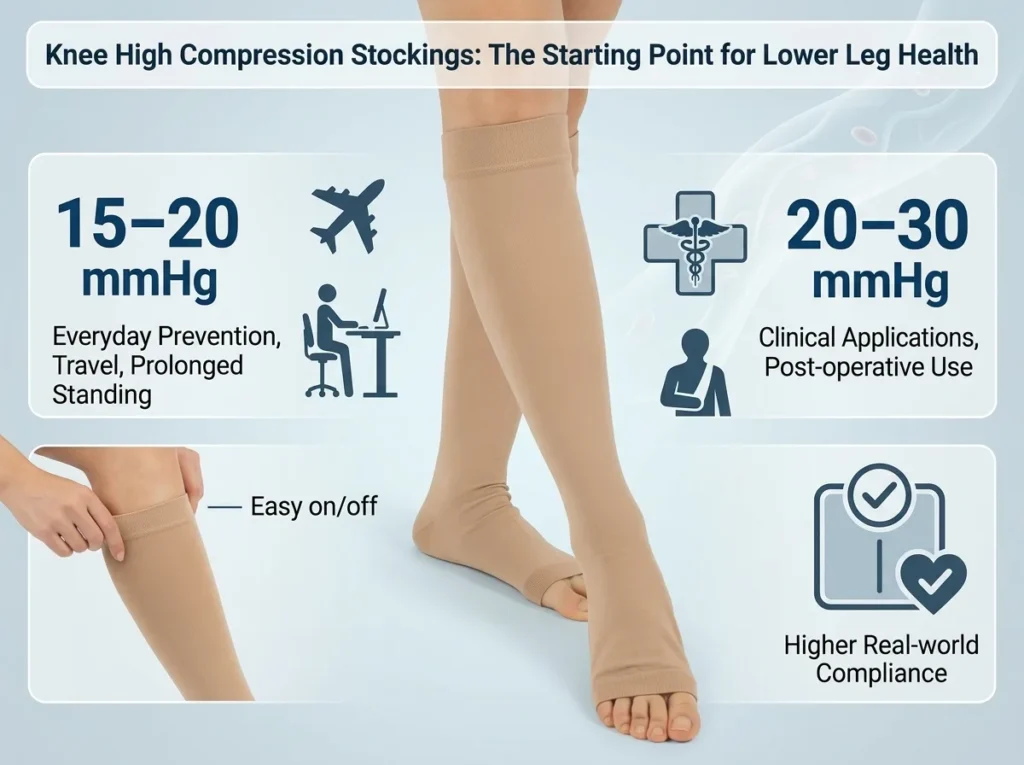
Bottom line: If the circulatory concern is below the knee, knee-highs are typically the right starting point.
What Are Thigh High Compression Stockings?
Thigh-high compression stockings extend from the foot all the way to the upper thigh — full-leg coverage.
These are typically prescribed rather than purchased over the counter.
Often recommended for patients with thigh-level varicose veins, proximal DVT risk, or post-surgical recovery — typically under physician guidance and prescription.
Advantages:
- Full coverage from foot to upper thigh
- Addresses concerns that extend above the knee
- Standard in many clinical and post-operative protocols
Challenges:
- Significantly harder to put on — especially without assistive tools
- Lower real-world compliance rates (more on this shortly)
- Higher unit cost due to greater material and construction complexity
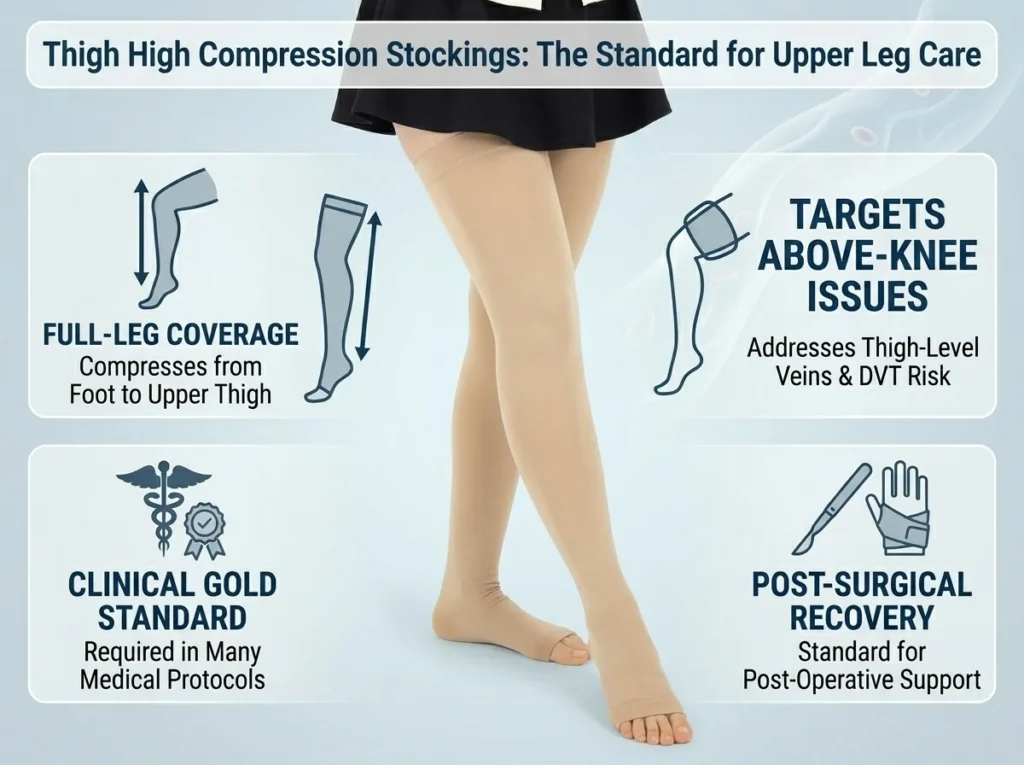
Bottom line: Thigh-highs are typically prescribed when the concern extends above the knee — under medical supervision.
Knee High vs Thigh High: Side-by-Side Comparison
| Dimension | Knee High | Thigh High |
|---|---|---|
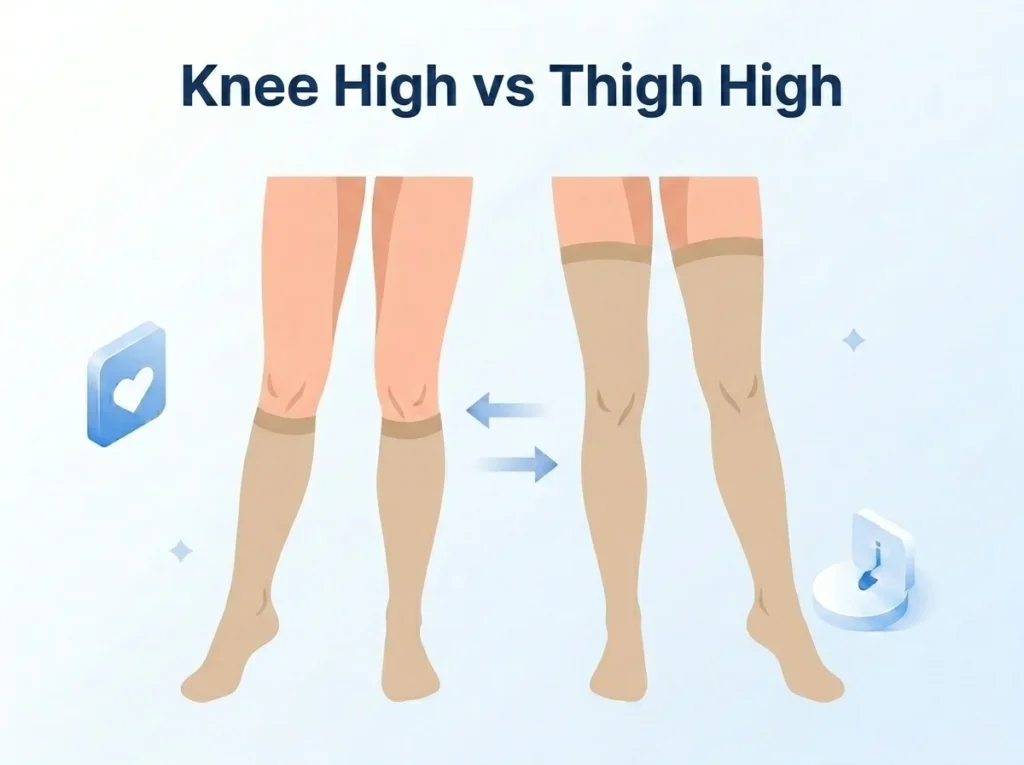
| Coverage | Ankle to below knee | Ankle to upper thigh |
| Best suited for | Below-knee concerns | Above-knee concerns |
| Ease of wear | Easy | Difficult |
| Patient compliance | High | Significantly lower |
| Relative cost | Lower | Higher |
| DVT prevention | Comparable* | Slightly broader (proximal)* |
*A systematic review published on PubMed (2012) found no statistically significant difference in DVT prevention between the two lengths in most patient populations. Individual clinical assessment is recommended.
What the Research Actually Says About DVT Prevention
Here’s where things get interesting.
Most articles confidently state that thigh-high stockings are “better” for DVT prevention.
The clinical evidence doesn’t fully support that claim.
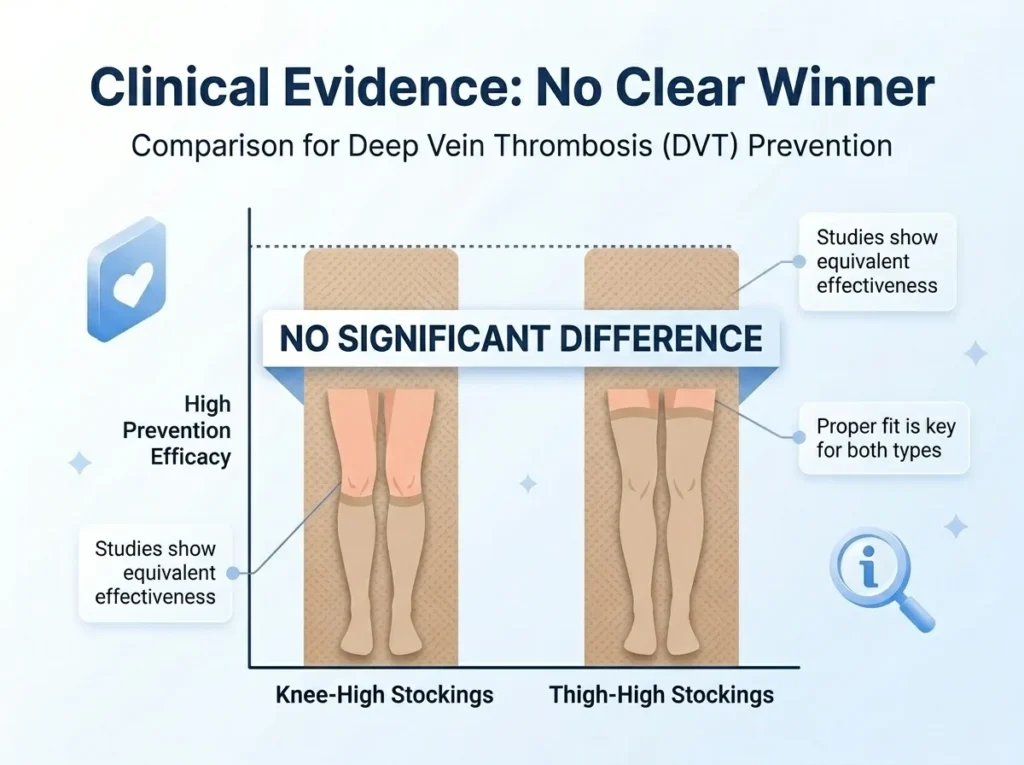
A systematic review published on PubMed (2012) found no statistically significant difference in DVT prevention rates between knee-length and thigh-length compression stockings in most patient populations. A separate Cochrane-level analysis of antiembolism stockings reached similar conclusions.
So what should actually guide your decision?
The location of the clinical risk — not a blanket preference for one length.
Thigh-high stockings may offer broader coverage when risk extends to the proximal thigh. But for concerns localized below the knee, knee-high stockings perform comparably.
The most appropriate choice should always be determined by a qualified healthcare provider based on individual assessment.
The Patient Compliance Problem Nobody Talks About
This is the section most comparison articles skip entirely.
And it may be the most important factor in real-world outcomes.
The data is striking:
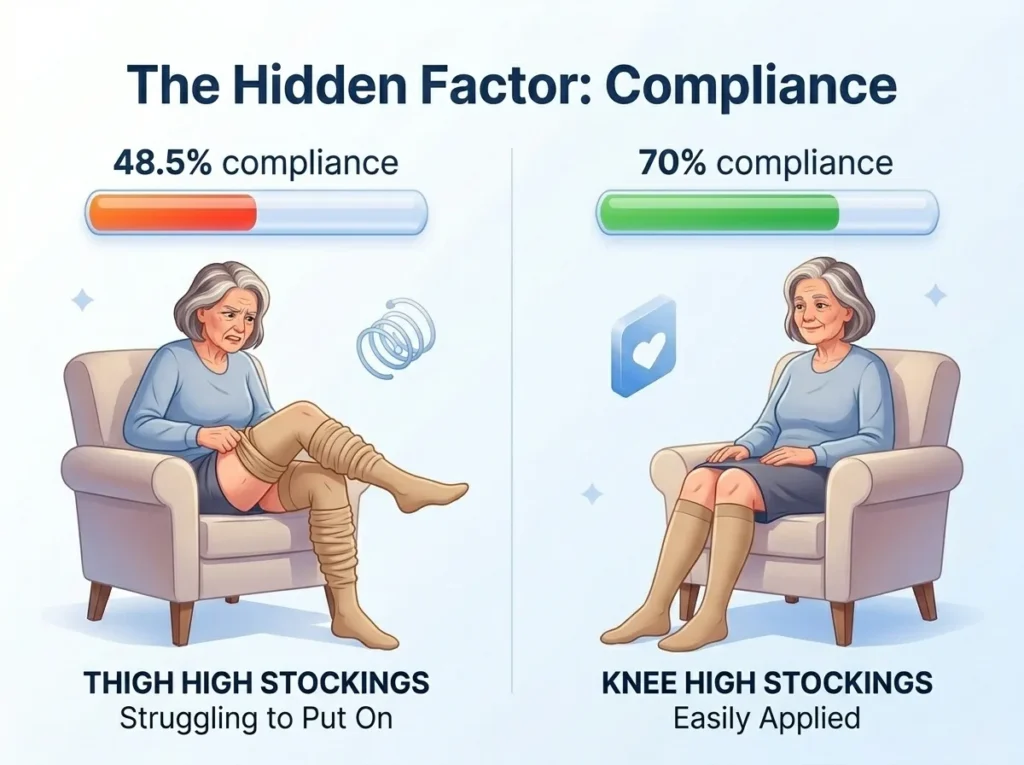
Studies have reported overall compression stocking compliance rates as low as 48.5% — rising to approximately 70% only after structured patient education programs (Journal of Vascular Surgery, 2018).
Thigh-high stockings consistently show lower compliance than knee-highs, particularly among:
- Elderly patients
- Individuals with limited hand strength or reduced mobility
- Patients managing compression therapy independently at home
The practical implication:
A knee-high stocking worn consistently every day may deliver better real-world outcomes than a thigh-high stocking worn only occasionally because it’s too difficult to put on.
For medical distributors, this creates two actionable insights:
- Don’t assume thigh-high = better outcomes. Compliance is part of the equation.
- Donning aids (stocking applicators) are an underutilized upsell opportunity — they directly improve thigh-high compliance and reduce product abandonment rates.
Body Type & Fit: Why Sizing Matters More Than Length
We’ll say it plainly:
Getting the right size is more important than choosing between knee-high and thigh-high.
An ill-fitting stocking of either type will underperform — and may cause discomfort or reduced therapeutic benefit.
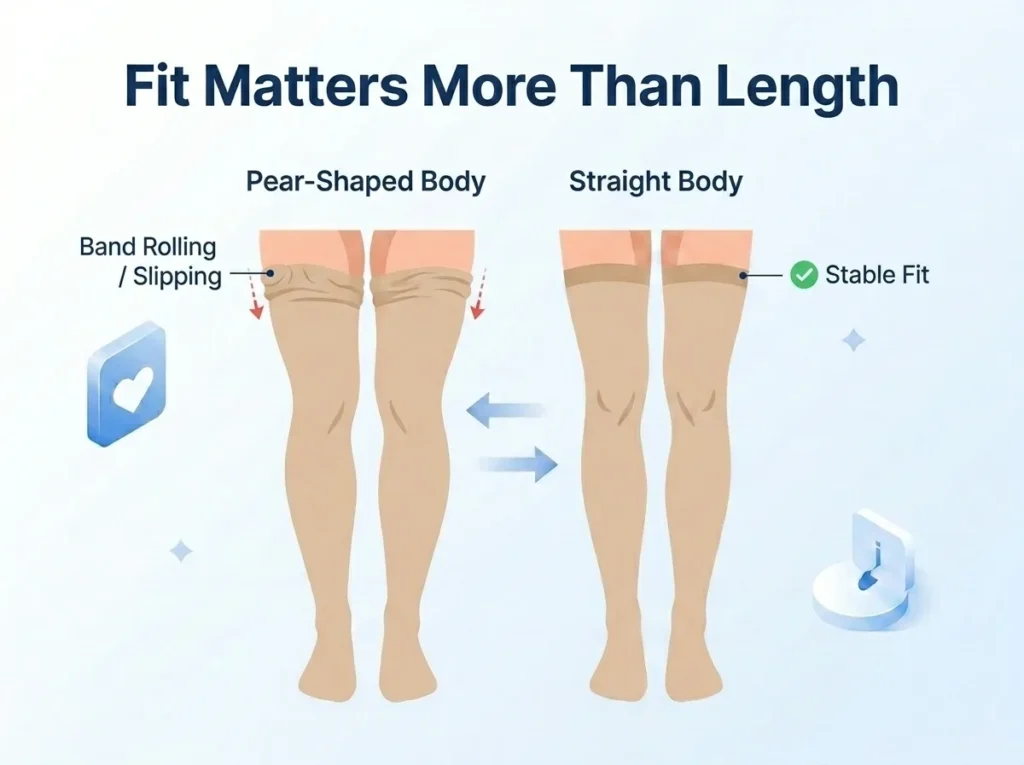
For thigh-high stockings specifically, body type has a major impact on performance:
Pear-shaped body types (wider hips, narrower waist)
→ The silicone top band tends to roll or slide down during the day, reducing effectiveness. A pantyhose-style compression garment is often a more reliable option.
Straighter body types
→ The silicone top band typically holds more securely, making thigh-highs a more consistent performer.
All body types: size accurately
→ Improper sizing may affect the actual compression delivered. A stocking that is too loose or too tight may not achieve the intended therapeutic mmHg level, as noted in compression textile research. Always measure calf circumference, ankle circumference, and leg length — and measure both legs, as they often differ.
A properly fitted knee-high will outperform an incorrectly sized thigh-high every time.
Material & Construction: What Actually Separates the Two Styles
Most buyers focus on length and compression level.
That’s a mistake.
The construction details below are what actually drive return rates, patient satisfaction, and long-term product performance.
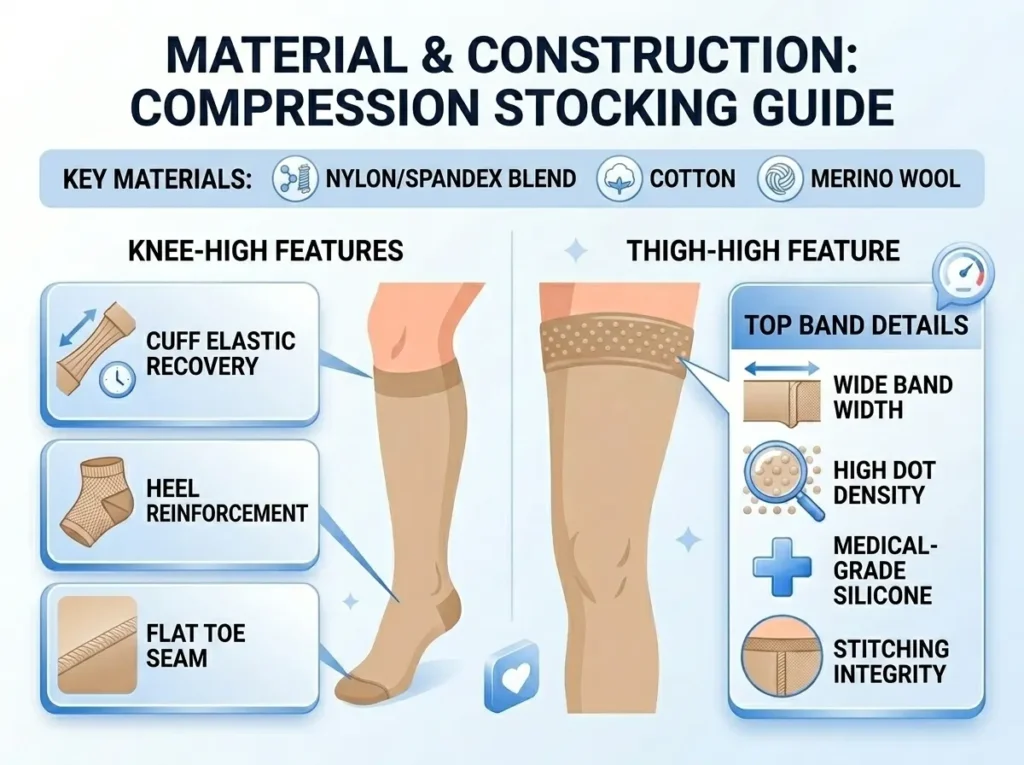
Core materials are largely consistent across both styles: a nylon and spandex (elastane) blend forms the base of most medical compression stockings. Premium lines incorporate cotton or merino wool for enhanced moisture management and comfort.
Where construction diverges — and why it matters:
Thigh-High Specific: The Silicone Top Band
This single component is responsible for more thigh-high product failures than any other factor.
In our manufacturing experience, silicone band quality is the most frequently cited issue in returns from distribution partners.
What to look for:
- Band width — wider bands distribute grip pressure more evenly
- Silicone dot density — higher density = more consistent hold
- Medical-grade vs standard silicone — medical-grade is softer, less likely to cause skin irritation, and maintains adhesion more reliably over repeated washing cycles
- Stitching integrity at the band-fabric transition — this is a stress point; poor stitching leads to early delamination
Always request this specification from a supplier before placing a bulk order.
Knee-High Specific: Three Construction Checkpoints
- Cuff elastic recovery rate — the welt band must hold position without creating a tourniquet effect. Test elastic recovery after multiple wash cycles, not just on new product.
- Heel reinforcement zone — critical for users who stand for extended periods. A reinforced heel pocket meaningfully extends product lifespan.
- Toe seam construction — flat-toe seams reduce pressure point discomfort, particularly relevant for diabetic-appropriate product lines.
Which Is Better for Varicose Veins?
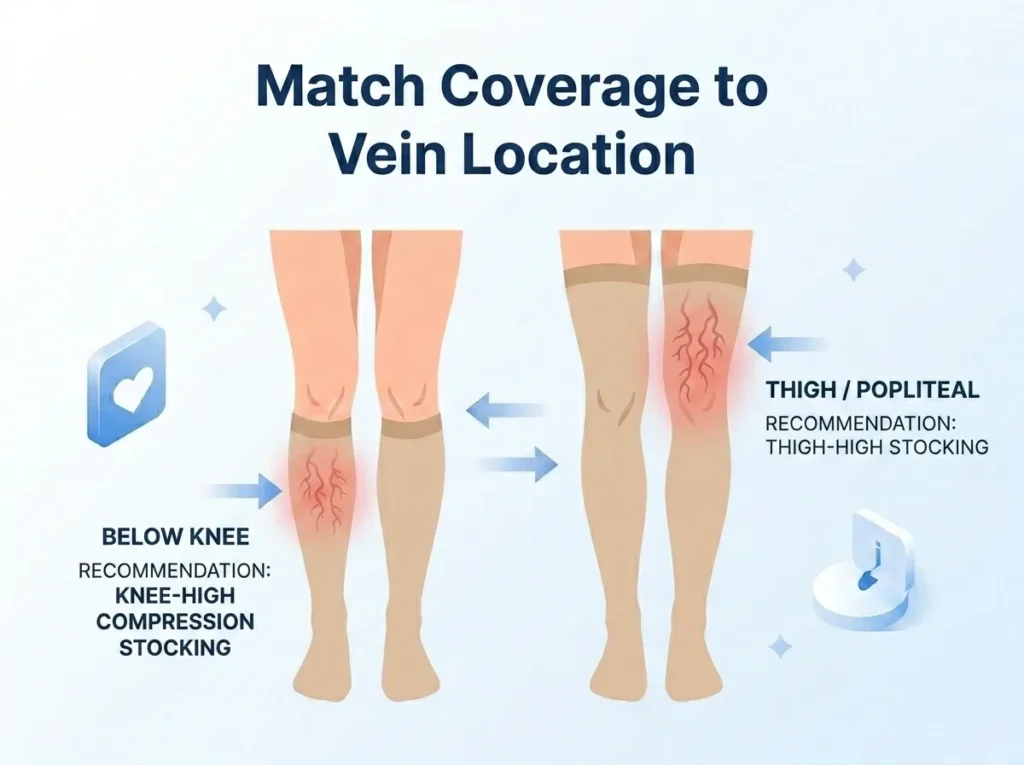
The answer depends on one thing: where the varicose veins are located.
For varicose veins localized below the knee, knee-high stockings are generally considered sufficient by many clinicians — though individual physician assessment is always recommended.
When varicose veins extend to the thigh or behind the knee (the popliteal region), thigh-high styles are more commonly prescribed to ensure the affected area receives adequate graduated compression.
A note for pregnant women: Consult your OB/GYN or midwife before selecting thigh-high styles, as individual abdominal and pelvic considerations may apply — and compression needs can change across trimesters.
For knee high vs thigh-high compression stockings for varicose veins, the principle is consistent: match the coverage to the location of the concern, as guided by your healthcare provider.
How to Choose: A Practical Reference Guide
The following is a general reference guide based on common clinical usage patterns. Final selection should always be made in consultation with your healthcare provider.
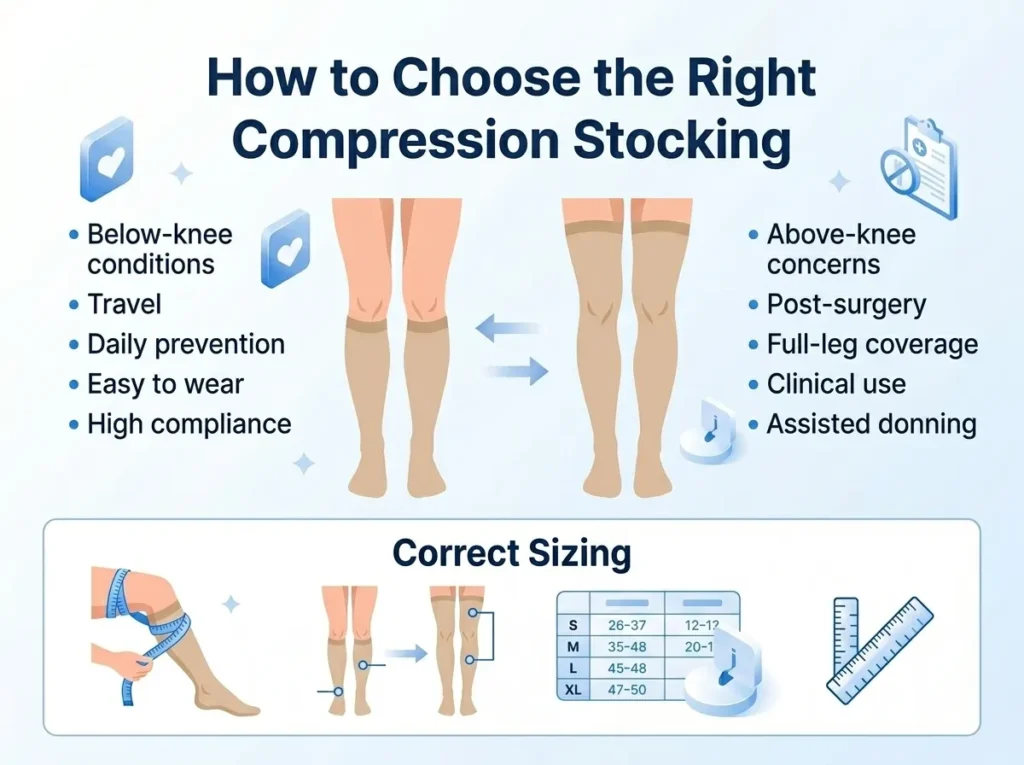
Knee-highs are commonly used for:
- Circulatory concerns below the knee
- Everyday prevention and general leg wellness
- Travel and prolonged sitting
- Occupations requiring extended standing
- Patients for whom ease of donning is a priority
- Scenarios where high compliance rates are essential
Thigh-highs are commonly used for:
- Concerns extending above the knee (physician-assessed)
- Post-surgical recovery requiring full-leg coverage (prescribed)
- Clinical settings with professional donning assistance available
- Patients under active medical supervision
Non-negotiable for both styles:
Correct sizing. Every time. An improperly fitted stocking — regardless of length — may not deliver the intended compression benefit. Measure both legs. Use the manufacturer’s sizing chart. When in doubt, ask.
For Medical Distributors: Your Sourcing Checklist
Knee-high and thigh-high compression stockings are not competing products.
They’re complementary — and stocking both is the only way to serve the full prescription range your customers need.
Here’s what to verify before committing to a supplier:
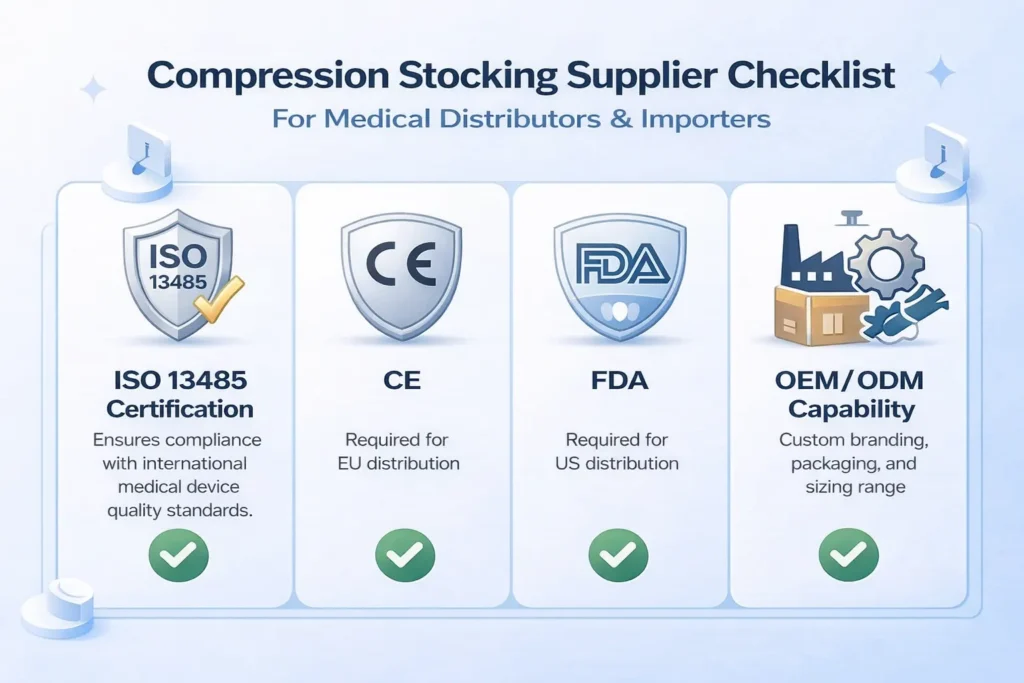
- ✅ ISO 13485 certification — non-negotiable for regulated medical markets
- ✅ CE marking and/or FDA registration — required for EU and US distribution
- ✅ Medical-grade silicone top band — confirm specification in writing for thigh-high styles
- ✅ Full compression level range — 15–20, 20–30, and 30–40 mmHg across both styles
- ✅ OEM/ODM capability — custom labeling, packaging, and sizing range
- ✅ MOQ and sampling policy — never skip physical samples
- ✅ Existing distribution references — proven experience in regulated markets matters
Haody Medical manufactures both knee-high and thigh-high compression stockings for medical distributors across the US, Europe, and Australia. ISO 13485 certified, with full OEM and private label capability.
[Request samples or bulk pricing →]
Medical Disclaimer: This content is provided for educational and informational purposes only. It does not constitute medical advice, diagnosis, or treatment recommendations. Always consult a qualified healthcare professional before beginning any compression therapy.
References:
- Sachdeva A, et al. Graduated compression stockings for prevention of deep vein thrombosis. Cochrane Database of Systematic Reviews, 2010.
- Compliance rates and patient education in compression therapy. Journal of Vascular Surgery, 2018.
- Comparison of 15–20 mmHg versus 20–30 mmHg compression stockings. PMC / National Institutes of Health, 2018.
- Thigh-length versus below-knee compression elastic stockings for DVT prevention. Blood Journal, 2012.