
Choosing the right compression stocking size is just as important as choosing the right compression level.
If the size is wrong, even a quality product can feel too tight, slide down, or fail to deliver the support it is designed for.
This guide shows you:
- What measurements you actually need
- How to measure ankle, calf, and leg length correctly
- How to read a compression stocking size chart
- What to do if you fall between sizes
- How B2B buyers and OEM partners should think about sizing
All based on real experience working with medical sock buyers, distributors, and brands.
Why the Right Size Matters
Compression stockings are not like regular socks. They apply controlled pressure to specific parts of the leg, so the fit must be precise.
If the stocking is too small:
- It can leave deep marks on the skin
- Feel overly tight or uncomfortable
- Be difficult to put on and take off
If it is too large:
- It may not provide enough support
- Can slide down during the day
- Lose the snug fit that makes compression effective
Height and shoe size alone are never enough. The most reliable way to choose the right size is to measure the key parts of the leg and compare them with the correct size chart.
What You Need Before Measuring
Before you start, prepare:
- A soft measuring tape (cloth or fiberglass)
- A pen or phone to record your numbers
- A chair or wall for stable standing/sitting
Measure:
- On bare legs if possible
- While standing or sitting in a relaxed position
- Preferably in the morning, before the legs swell
A rigid ruler will not work well here. You need a flexible tape that can follow the shape of the leg.
How to Measure for Compression Stockings (Step by Step)
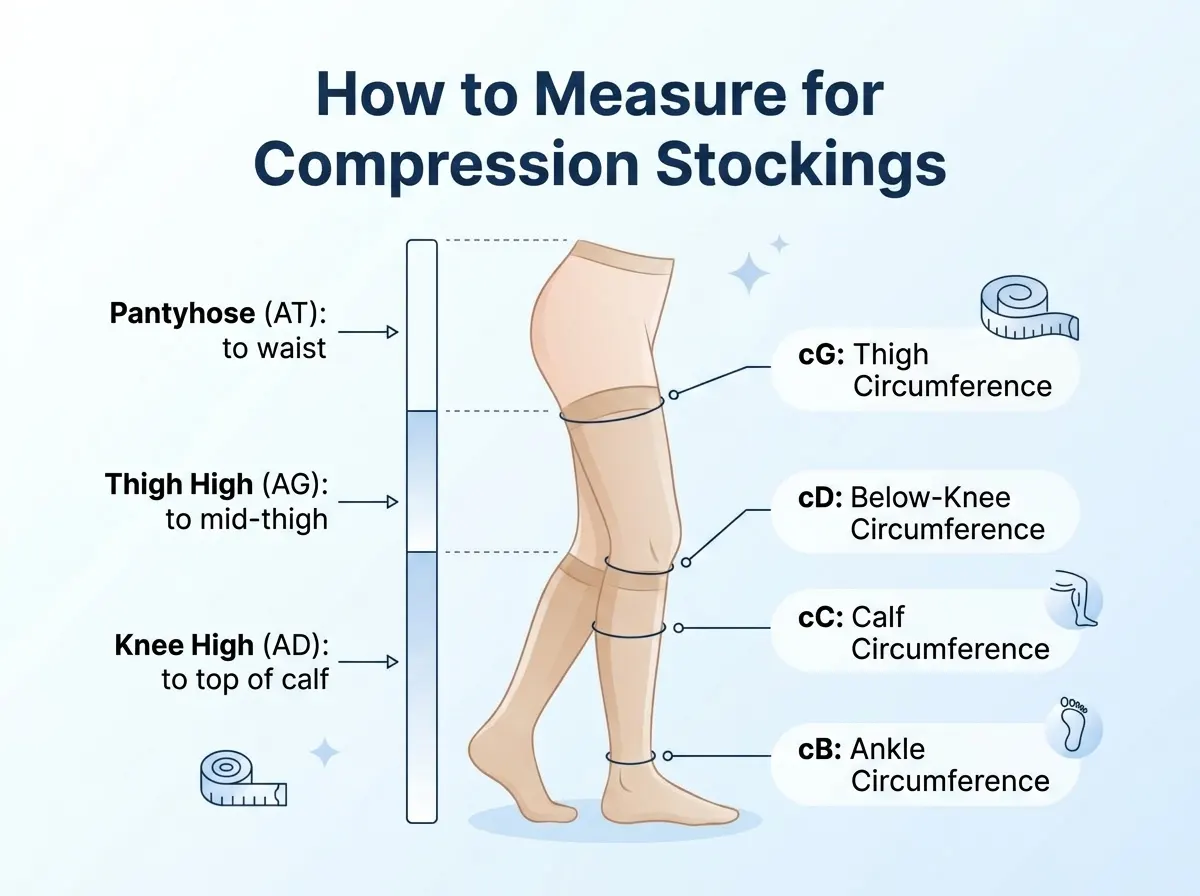
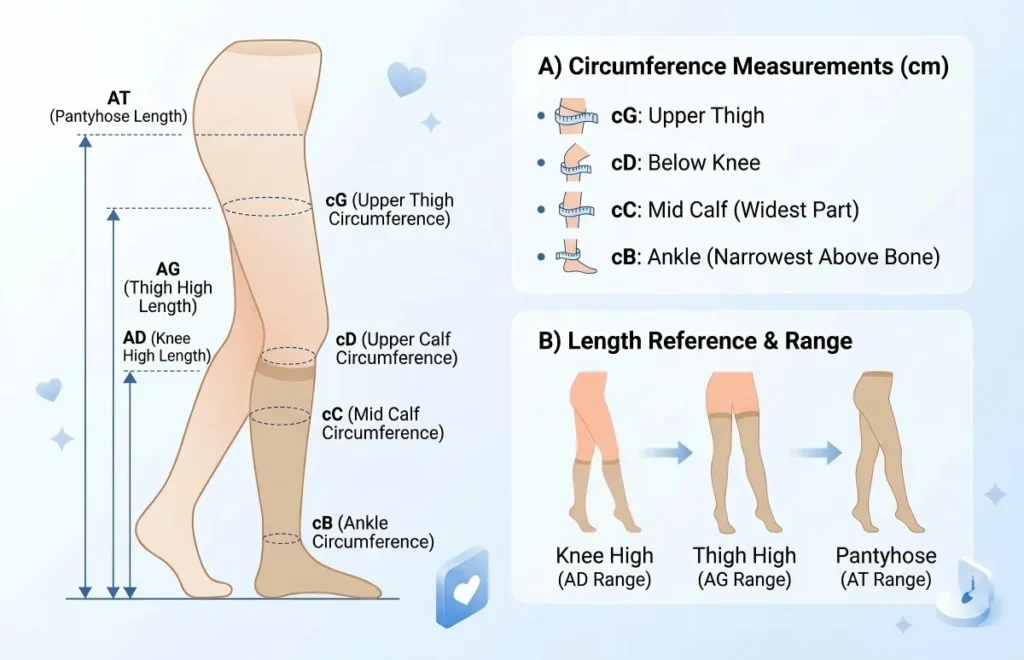
Step 1: Measure ankle circumference
Find the narrowest part of the ankle, usually just above the ankle bone.
Wrap the measuring tape around this point without pulling it tight. The tape should be flat and close to the skin, but not squeezing the leg.
Write down the number in centimeters and inches if possible.
This measurement is one of the main reference points in most compression stocking size charts.
Step 2: Measure calf circumference
Find the widest part of the calf. This is usually the most important measurement for knee-high compression stockings.
Wrap the tape around the fullest part, keep it horizontal and parallel to the floor. Do not squeeze.
Again, record both cm and inches if you can.
Many sizing mistakes happen because people measure at the wrong point or pull the tape too tight.
Step 3: Measure leg length for knee-high stockings
Measure from the floor up to just below the knee, or follow the exact measuring point shown in the product chart.
Different manufacturers may define the top point slightly differently, so always check the chart for the specific product you are buying.
Step 4: Measure thigh circumference for thigh-high stockings
For thigh-high stockings, you need a thigh measurement as well.
Measure around the upper thigh at the point indicated by the chart, usually near the fullest part of the thigh.
This measurement ensures the stocking will fit properly in the upper leg area.
Step 5: Measure leg length for thigh-high stockings
Measure from the floor up to the point specified by the chart, usually near the upper thigh or the top band position.
If the length is off, the stocking may slide down or sit too low, which affects comfort and performance.
Compression Stocking Size Chart (Example)
Below is a simple example of Haody Medical’s usual compression stocking size chart. The exact numbers will vary by product line, so always follow the chart provided by the manufacturer.
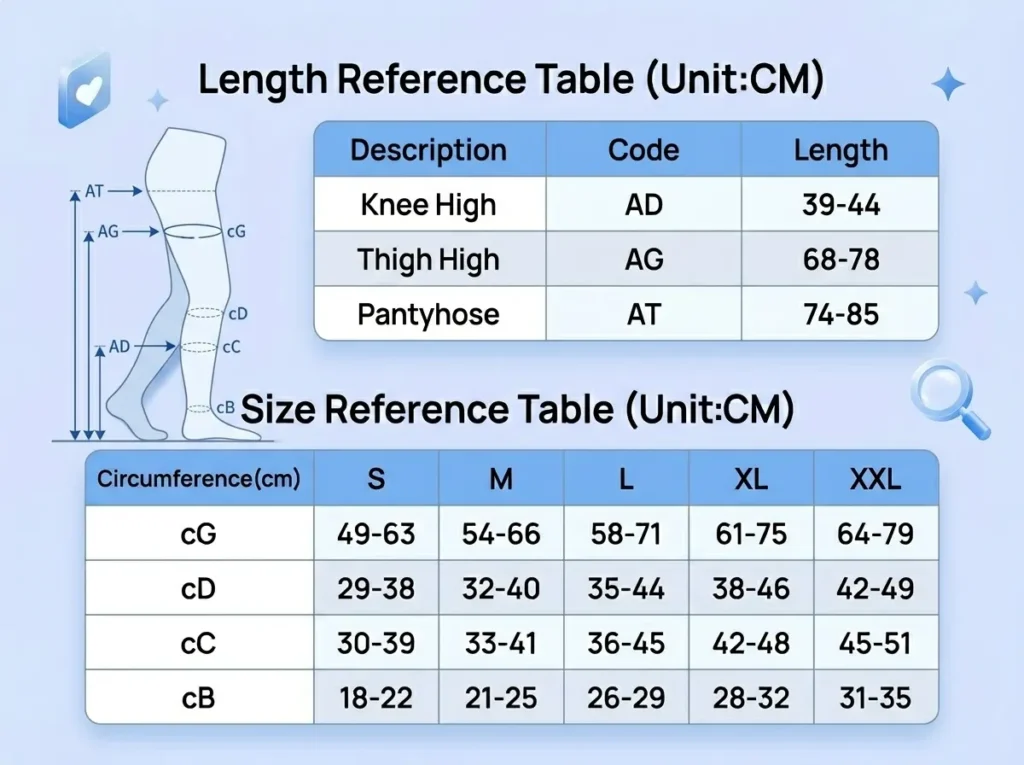
When comparing your own measurements:
- Match the ankle and calf numbers first
- Then confirm the length
- If one measurement fits one size but another fits a different size, check the product chart and design
For wholesale buyers or OEM/ODM projects, sizing should always be checked against the exact construction of the product. Fabric structure, stretch, and compression level can all affect the final fit.
How to Choose the Right Length
After you have your measurements, the next decision is length: knee-high or thigh-high.
Knee-high stockings:
- Easier to wear for most people
- More common for everyday use
- Good for ankle and calf support
Thigh-high stockings:
- Provide coverage higher up the leg
- Used when more upper-leg support is needed
- Require both thigh circumference and leg length
If you want a deeper comparison, see our article on Knee High vs Thigh High Compression Stockings: How to Choose the Right Length. That will help you move naturally from one decision to the next.
What If You Are Between Sizes
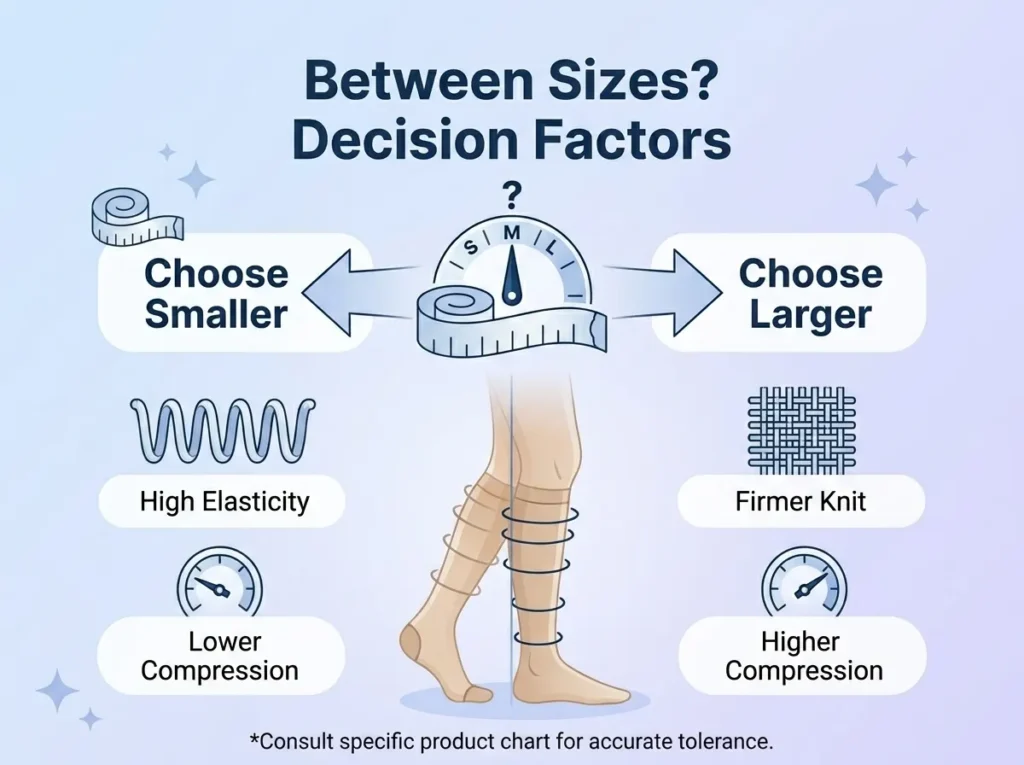
If your measurements fall between two sizes, do not guess blindly.
First, check the chart for the exact product, because some brands allow slightly different tolerance ranges.
Consider the material:
- A more elastic fabric may feel different from a firmer knitted structure
- A higher compression level may feel tighter even if the size is the same
For bulk buyers, this is where sample testing becomes important. One size may look correct on paper, but the real fit should always be checked before mass production or large orders are finalized.
Why Size Charts Differ by Product Line
Not every compression stocking uses the same measurement rules.
Different materials, knitting methods, and compression levels can all change how the stocking fits on the leg.
That is why a chart from one product should not be copied and used for another product without checking the construction first. A chart for a light compression style may not work the same way for a stronger compression design.
Compression stocking size is not determined by leg measurements alone; fabric construction, compression level, and product line can all affect the final fit.
For a medical sock manufacturer like Haody Medical, this is especially important because the right sizing logic needs to match the real product, not just a generic table.
Sizing Tips for OEM and Bulk Orders
If you are buying for a brand, distributor, pharmacy, or medical channel, sizing should be planned more carefully than a single retail purchase.
It helps to:
- Define the target market first
- Confirm the size distribution that best matches your customers
- Consider a wider size range or adjusted fit if needed
- Use private-label packaging that explains sizing more clearly
For OEM/ODM projects, sample approval matters. Before mass production, it is better to test the size range on real users or sample legs so that the final product fits the market properly.
Haody Medical supports custom sizing and adjusted size ranges for bulk orders, depending on the product and project requirements.
Common Mistakes to Avoid
Choosing by shoe size only
Shoe size does not tell you enough about ankle or calf circumference, so it is not a reliable way to choose compression wear.
Measuring over thick clothing
This can give a false number and lead to the wrong size. Measure on bare legs if possible.
Pulling the tape too tight
A tight tape can create a number that is smaller than the real size.
Mixing up knee-high and thigh-high measuring points
If the wrong chart is used, the fit will not be accurate even if the measurements are close.
Using the wrong chart for the wrong product line
Different products may use different measurement rules. Always follow the chart for the exact product you are buying.
Final Thoughts
The right compression stocking size starts with accurate measurements, but it does not end there.
You also need to consider:
- The product line
- The compression level
- The material and knitting structure
- The intended use
If you are buying for yourself, a clear size chart will help you choose with confidence.
If you are buying for a business, a distributor, or a medical brand, the right sizing approach can reduce returns, improve user satisfaction, and make the final product more successful in the market.
For product-specific sizing support, it is always best to follow the manufacturer’s chart and confirm details before placing a large order.
About this guide
This guide was written by Haody Medical’s product team. We specialize in medical socks, compression stockings, diabetic socks, and related medical consumables, with experience in OEM/ODM sizing development and working with international buyers.
Our compression stockings are used in medical channels, pharmacies, and distribution networks across multiple markets. For product-specific sizing support, custom sizing, or bulk order consultation, feel free to contact Haody Medical.