
Why Diabetes Puts Feet at Risk
Diabetic foot problems rarely start with a dramatic injury. They start small: local vascular lesions reduce blood flow to the feet, the tissue loses resilience, and — because diabetic neuropathy dulls sensation — the patient no longer feels the friction, pressure points, or blisters that a healthy foot would flag immediately. Left unnoticed, those small injuries progress into ulcers, infections, and in severe cases even amputation.
This is why foot care is not an optional extra for people with diabetes — it is daily prevention. And the first line of that defense is the sock that sits against the skin all day.
What Exactly Are Diabetic Socks?
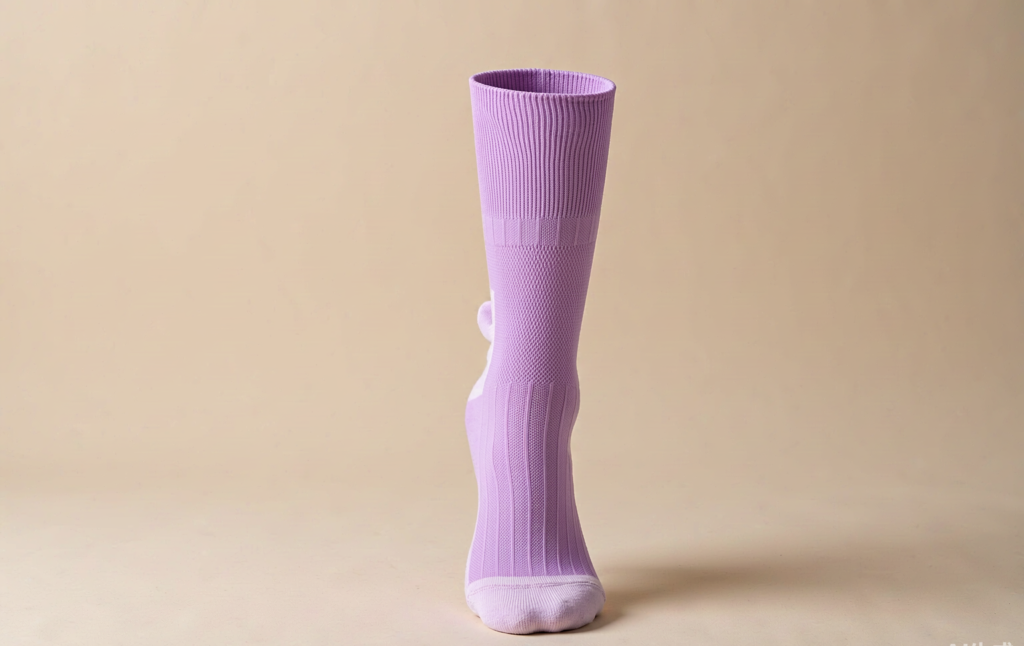
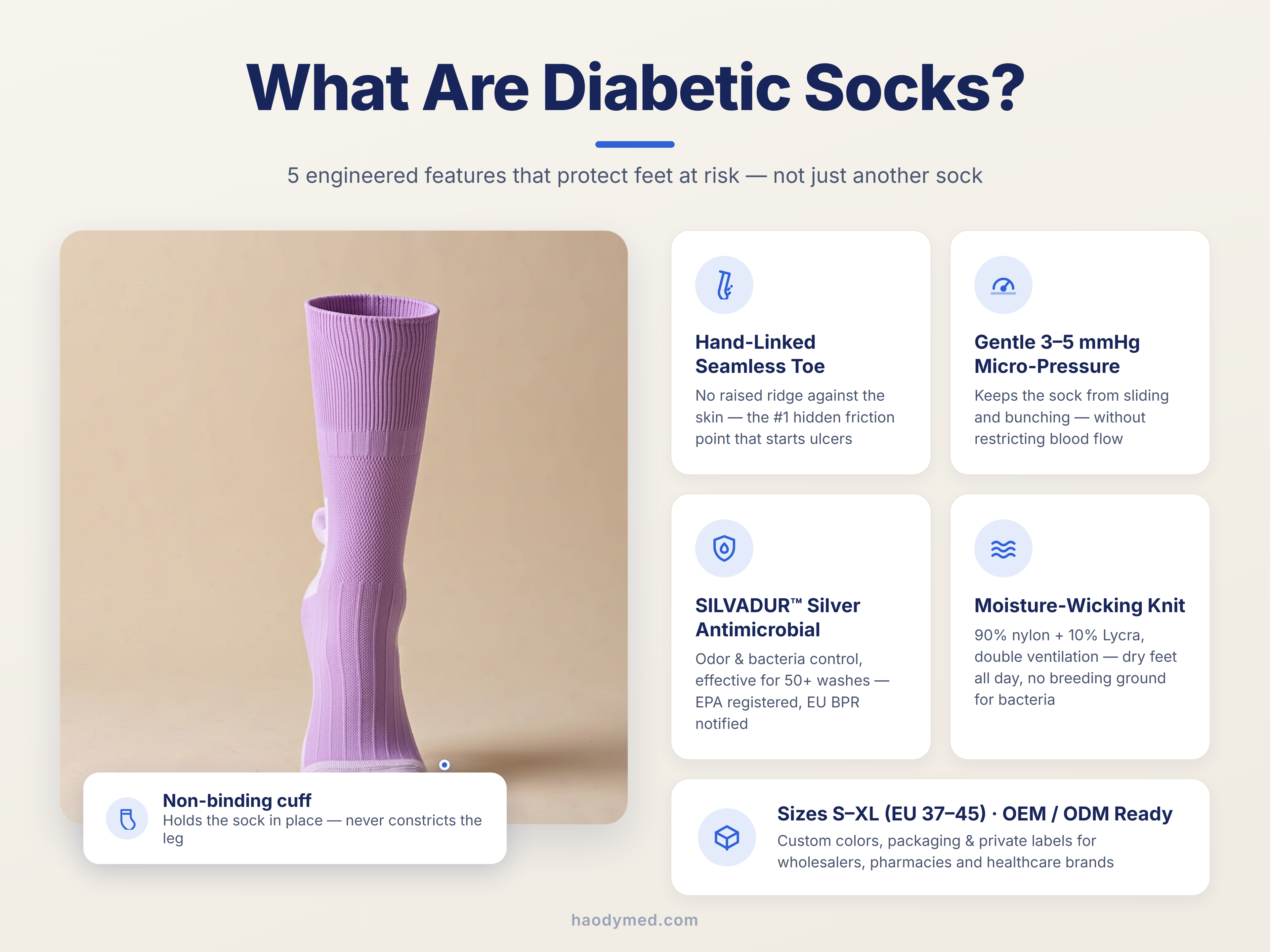
Diabetic socks are therapeutic socks engineered specifically for diabetes-related foot risks. Unlike fashion or athletic socks, every design decision serves one goal: eliminate the points of pressure, friction, moisture, and bacterial growth that a diabetic foot cannot defend itself against.
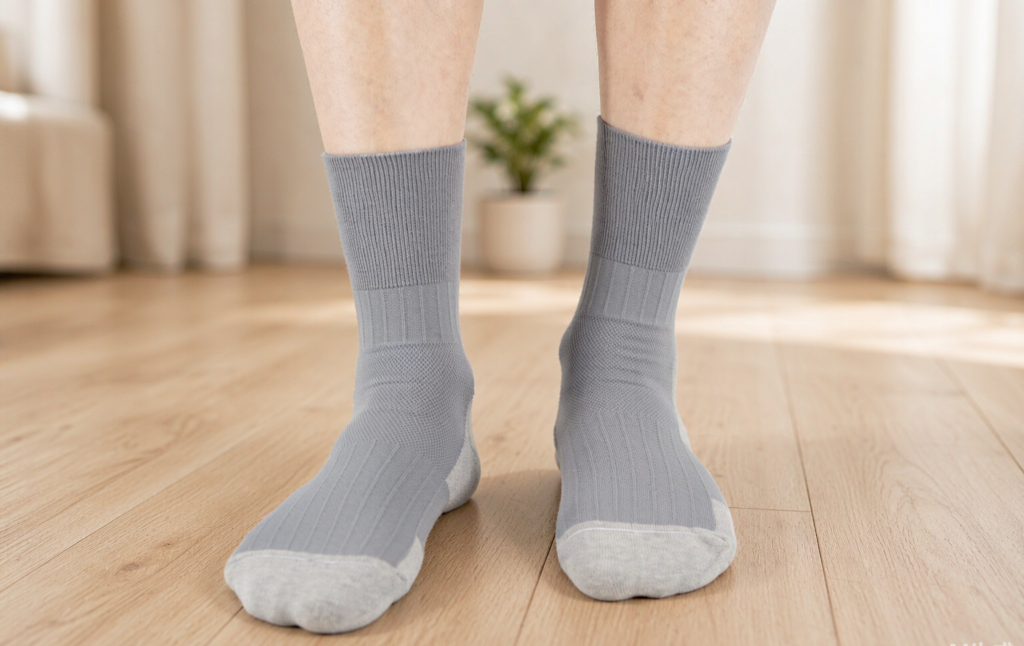
A true diabetic sock is skin-friendly, applies only micro-pressure (never constriction), manages perspiration, and inhibits bacterial and odor growth. It looks deceptively similar to a normal crew sock — the difference is in the details you can’t see.
5 Features That Separate Real Diabetic Socks from Ordinary Socks
1. Non-Binding Cuff
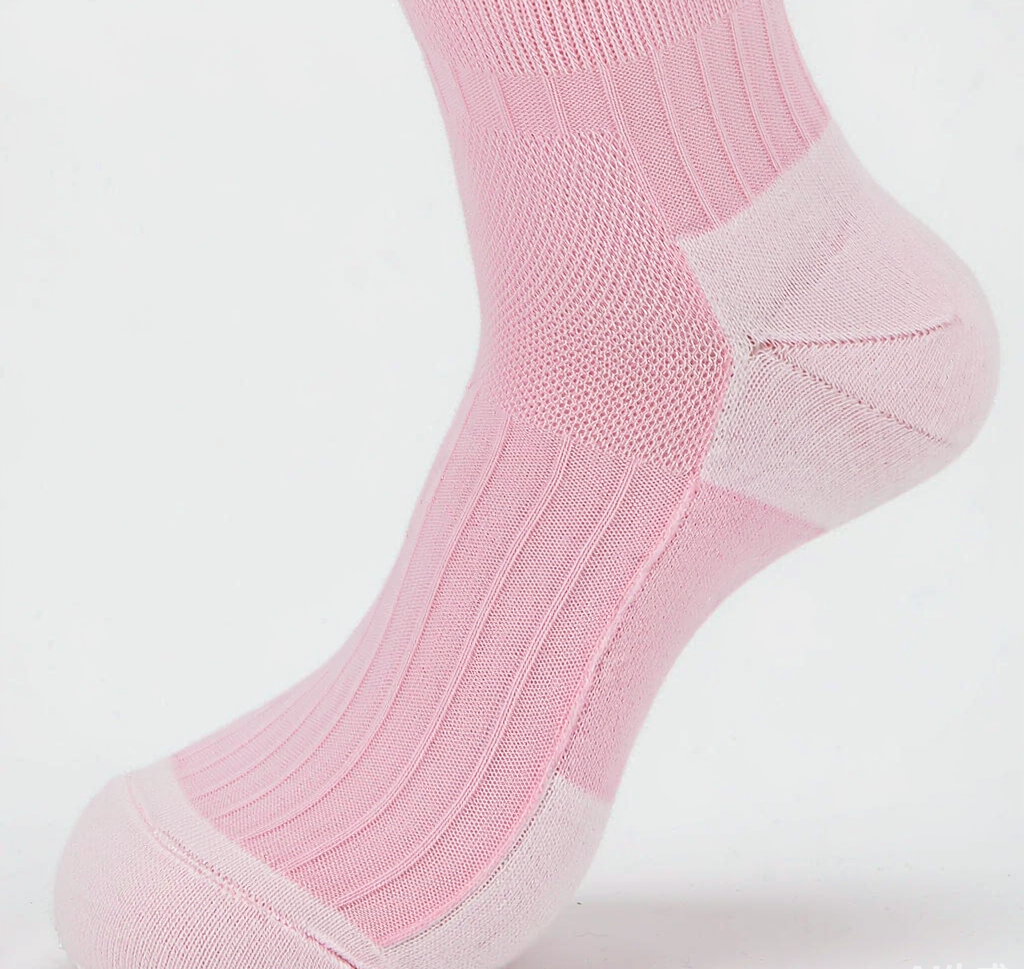
A conventional sock cuff relies on tight elastic ribs to stay up. On a diabetic leg, that same rib can leave a visible constriction ring and restrict already-impaired circulation. A proper diabetic sock uses a loose, non-binding cuff that holds the sock in place without ever constricting the leg.
2. Seamless, Hand-Linked Toe
The toe seam of an ordinary sock is a raised ridge of stitching. For a foot with reduced sensation, that ridge is a constant, unnoticed friction point — one of the most common starting sites for ulcers. Quality diabetic socks use a hand-linked seamless toe, leaving the toe area perfectly smooth against the skin.
3. Gentle Ankle Pressure (3–5 mmHg)
Diabetic socks are not compression stockings. The heel and arch carry a considerate, comfortable micro-pressure of just 3–5 mmHg — enough to keep the sock from sliding and bunching (bunching = friction), but low enough that it never restricts blood flow. This is a critical distinction we cover in the comparison below.
4. Moisture Management
Damp skin macerates, softens, and breaks down faster — and warm, wet fabric is a breeding ground for bacteria and fungus. A breathable cotton-blend feel combined with moisture-wicking performance keeps feet drier through the day. Ours uses a helicitic texture with double ventilation for exactly this reason.
5. Antibacterial & Odor-Proof Treatment
This is where technology matters. Our diabetic socks are treated with SILVADUR™ antimicrobial technology, a patented polymer-delivery system that carries silver ions efficiently into the textile. It controls odor-causing bacteria and keeps the sock fresh for 50+ washes.
- Recognized and listed as an Active Chemical Product by the International Antimicrobial Council and OEKO-TEX® Association as harmless to human health when used as indicated
- Registered with the U.S. EPA and notified under EU BPR
- Non-sensitizing and non-irritating; recyclable and reusable during processing
- Test reports issued by the International Antimicrobial Council; authentication tags authorized by SILVADUR (certificate available on request)
Diabetic Socks vs. Regular Socks vs. Compression Stockings
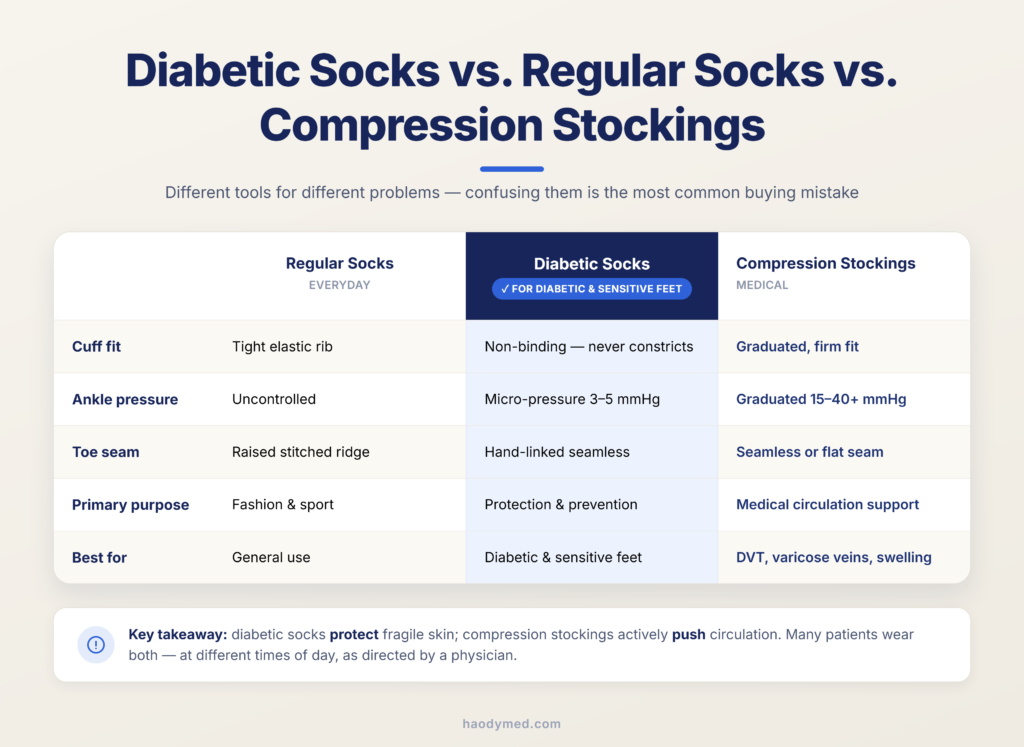
Key takeaway: diabetic socks protect fragile skin; compression stockings actively push circulation. They are different tools for different problems — and many patients wear both, at different times of day, as directed by a physician. Confusing the two is one of the most common retail mistakes we see distributors make.
How to Choose the Right Pair
Step 1: Match the Size to EU Shoe Size
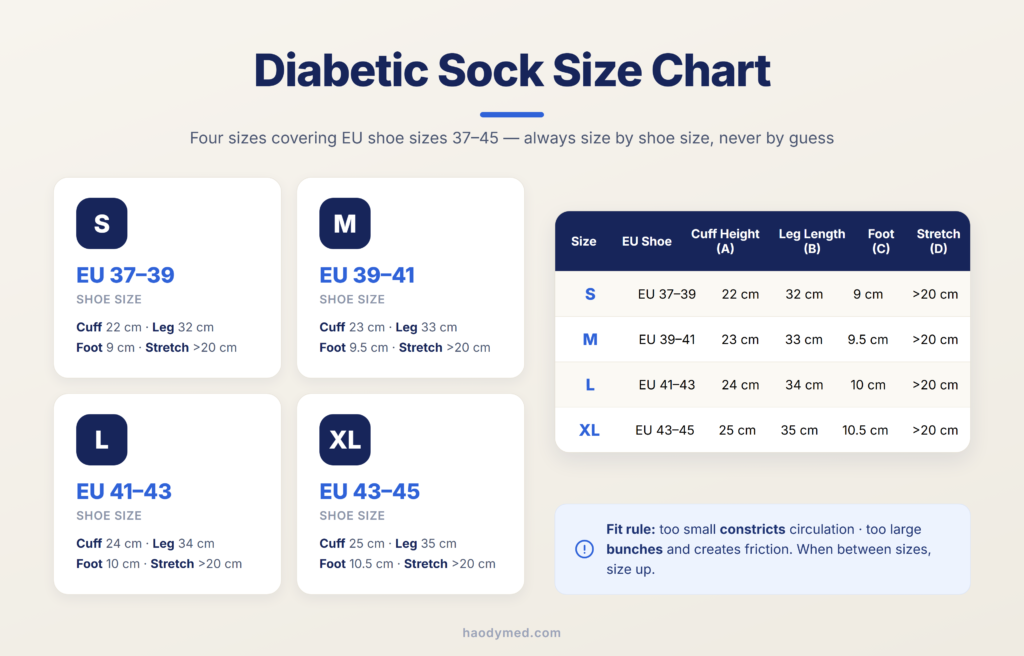
Sizing is the most common error. A sock that is too small constricts; too large, it bunches and creates friction. Our diabetic socks come in four sizes covering EU 37–45:
Step 2: Check the Composition
Our socks are knitted from 90% super-grade nylon + 10% Lycra — a blend chosen because Lycra delivers four-way stretch and shape retention (so the non-binding cuff stays non-binding wash after wash), while the fine-gauge nylon knits smooth, breathable, skin-friendly fabric with an antiskid, helicitic texture.
Step 3: Verify the Antimicrobial Claim
“Antibacterial” on a label means nothing without a test report. Ask your supplier for: the antimicrobial technology name, its EPA registration / EU BPR status, and third-party test reports. If a supplier cannot produce these, walk away.
Step 4: Look for OEM Capability (for Distributors)
If you are a wholesaler, pharmacy chain, or healthcare brand, confirm the factory can support OEM/ODM: custom colors, packaging, logo, and certification documentation for your market.
Packaging & Logistics (For Wholesale Buyers)
Frequently Asked Questions
Do diabetic socks really make a difference?
For anyone with reduced foot sensation or circulation, yes — the elimination of tight cuffs, ridged seams, and damp bacterial environments removes the three most common triggers of diabetic foot complications. They are a low-cost, high-impact form of daily prevention.
Can I wear diabetic socks if I don’t have diabetes?
Absolutely. Anyone with sensitive skin, swollen feet, or who simply wants a non-binding, seamless, odor-resistant sock benefits from the same design.
Are diabetic socks the same as compression socks?
No. Diabetic socks use gentle 3–5 mmHg micro-pressure to stay in place without constriction. Compression stockings use graduated 15–40+ mmHg pressure to actively support circulation. See the comparison table above.
How long does the antibacterial effect last?
The SILVADUR™ treatment remains effective for 50+ home washes under normal care.
Can I get these with my own brand (OEM)?
Yes. We are a medical supplies manufacturer with production bases in China and Vietnam, supporting OEM/ODM for colors, sizing, packaging, and private labels. Contact us for a quote.
The Bottom Line
A diabetic sock is the cheapest insurance policy in diabetic foot care: seamless where skin is fragile, loose where circulation is weak, dry where bacteria breed. Choose by size, verify the antimicrobial claim, and buy from a manufacturer who can show you the certificates.
Disclaimer: This article is for informational purposes only and is not medical advice. Patients should consult their physician for diagnosis and treatment recommendations.
Looking for graduated compression instead? See our compression stockings or browse the full hospital & diabetic socks range.