haody medical logo

What Are Diabetic Socks? Features, Benefits, and How to Choose the Right Pair

what are diabetic socks

Author: Haody Medical Content Team
Reviewed by: Haody Medical Product Team


Disclaimer: This article is for general product information purposes only. It does not constitute medical advice and is not a substitute for professional healthcare consultation. If you have concerns about foot health, neuropathy, circulation, pregnancy, or diabetes management, please consult a qualified healthcare professional.


Here’s something most people don’t realize:

The term “diabetic socks” doesn’t mean these socks are exclusively for people with diabetes.

Many people who choose them have no diabetes diagnosis at all — including pregnant women dealing with swollen, sensitive feet, athletes who want less friction in their shoes, and anyone who finds standard sock cuffs uncomfortably tight after a long day.

In this guide, you’ll learn exactly what diabetic socks are, what makes them structurally different from regular socks, and how to evaluate the features that actually matter before you buy.


What Are Diabetic Socks?

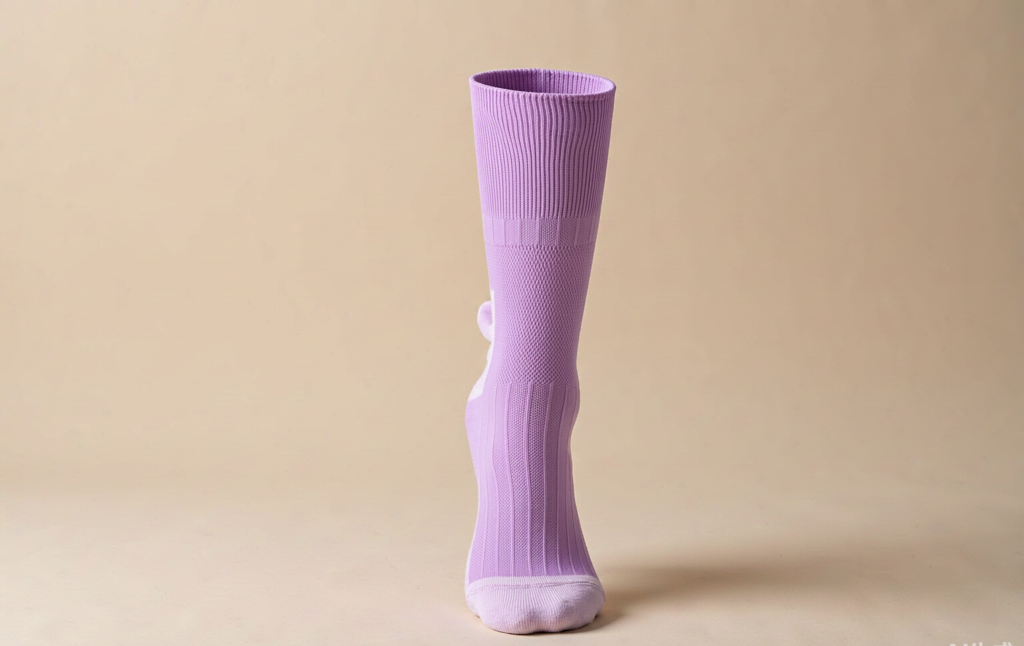
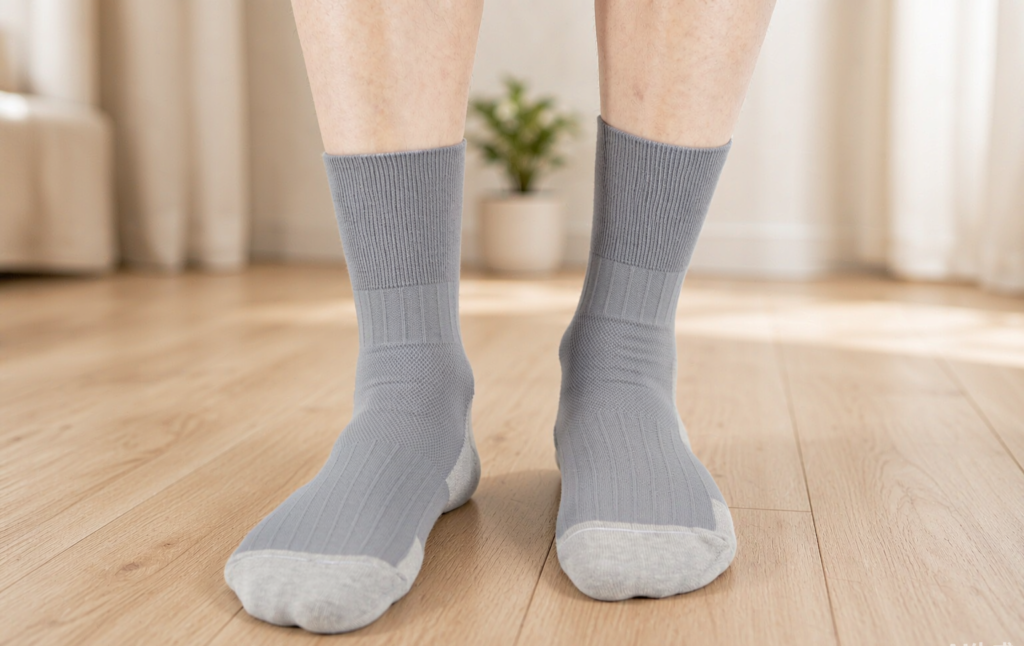
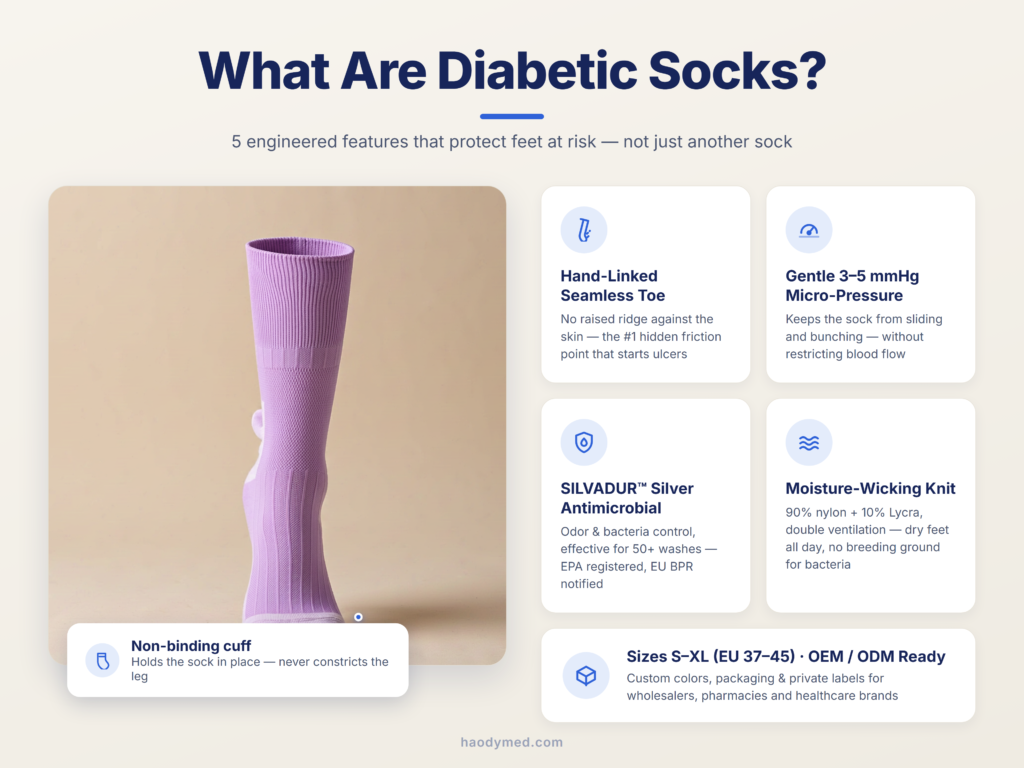
Diabetic socks are a category of supportive foot-care hosiery designed to reduce the physical irritation that is particularly uncomfortable for people with sensitive feet.

The core design goals come down to four things:

  • Reduce friction between sock and skin
  • Avoid tight constriction around the ankle and lower leg
  • Help manage moisture during extended wear
  • Provide cushioning in pressure-prone areas

The American Diabetes Association’s foot care guidance specifically recommends socks that fit well, avoid tight bands, wick away moisture, and have no seams — a description that maps directly to what diabetic socks are designed to deliver.

What they are not: Diabetic socks are not a treatment for diabetes, neuropathy, or any other medical condition. They are an everyday comfort product — engineered to be gentler on the foot than most conventional socks.

The term has become widely used in both retail and medical supply contexts. But as we’ll cover below, not every product that carries the label lives up to the same design standard.


What Features Actually Make Diabetic Socks Different?

This is where most buying guides stay at the surface level. Here’s the fuller picture.

Non-Binding Tops

The cuff of a diabetic sock is knitted with minimal elastic — designed to hold its position without compressing the lower leg or leaving pressure marks after a full day of wear.

Standard dress socks and many athletic socks use tight elastic bands that can restrict the lower leg during prolonged wear. The non-binding cuff eliminates this issue — which matters especially for anyone whose feet or ankles tend to swell throughout the day.

Seamless or Flat-Toe Closure

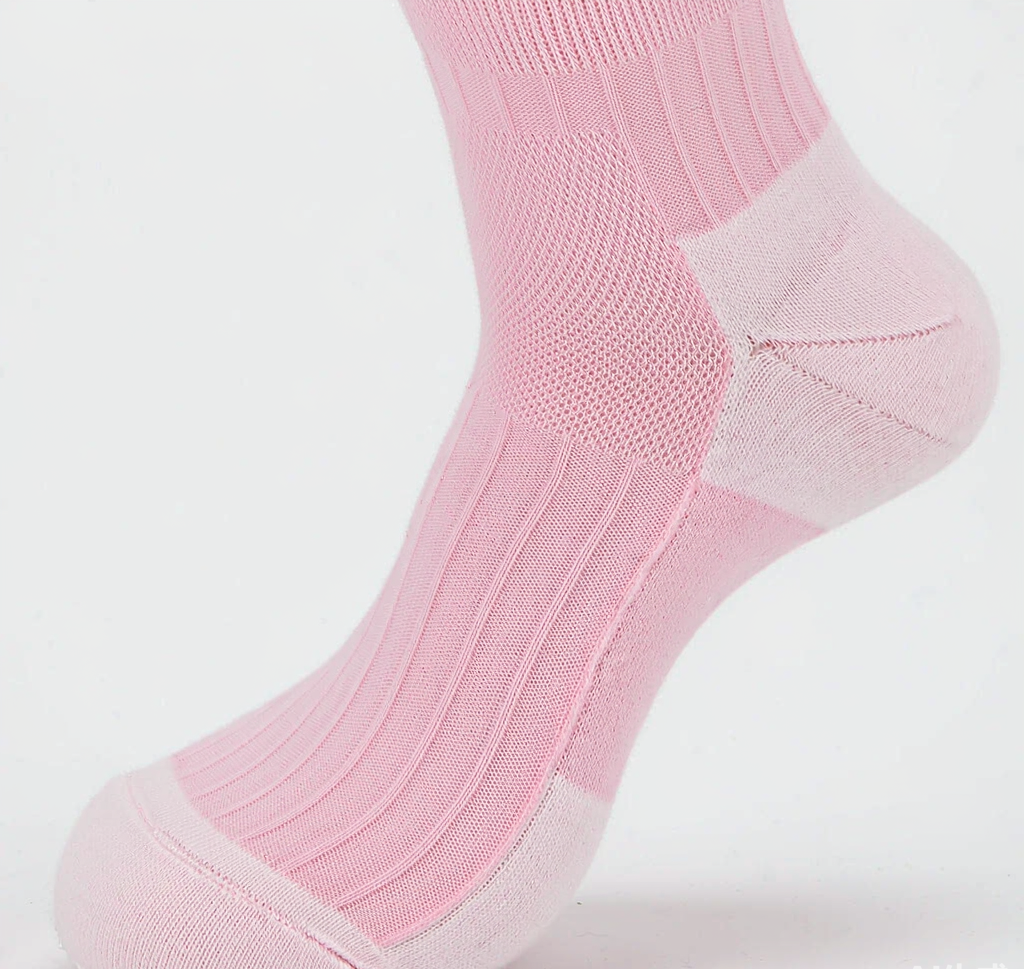
Many diabetic socks feature seamless toe closure or a very flat, smooth-linked seam at the toe box. This reduces a common source of skin irritation and blistering — the friction point that occurs when a standard toe seam rubs against the skin with every step. Walgreens’ healthcare editorial team identifies seamless or smooth-toe construction as one of the defining characteristics of this product category.

Moisture-Wicking Construction

Keeping feet dry is a functional priority. Moisture-management fabrics draw perspiration away from the skin, creating a drier contact surface during daily wear — which supports overall comfort and reduces the kind of sustained skin exposure that can lead to irritation over time.

Zone-Specific Cushioning

Extra padding in the heel, ball of the foot, and toe areas helps absorb ground impact and redistribute pressure across a wider contact zone during walking and standing. According to Healthline’s clinical review, cushioned soles are one of the key features that distinguish diabetic socks from standard options.

Fit That Stays Put

A properly fitting diabetic sock should conform to the foot without bunching inside the shoe. Material that folds inside footwear creates localized pressure points — often more problematic than a slightly tight cuff.


The Part Most Articles Skip: Construction Matters as Much as Fiber

Here’s something worth understanding before you buy.

Most product descriptions focus heavily on fiber type — cotton, bamboo, wool, copper, silver. But sock performance depends on more than what the yarn is made of.

Knit density, yarn construction, and section-specific design all affect how a sock behaves in actual wear — in terms of friction, breathability, moisture handling, and durability. A 2026 systematic review published in PubMed Central found that sock performance across these variables depends significantly on construction methodology, not fiber composition alone. Two socks made from the same listed fiber can perform very differently depending on how they were manufactured.

This is worth keeping in mind when comparing products at similar price points, especially when the primary differentiator in the product description is a fiber ingredient rather than a construction feature.


What Do Diabetic Socks Actually Help With?

Let’s be specific — and honest — about what these socks can and cannot do.

What they can reasonably help with:

  • Reducing friction-related skin irritation inside footwear during daily activity
  • Keeping feet drier and more comfortable across extended wear periods
  • Light cushioning and improved pressure distribution in high-contact zones
  • A more comfortable, non-restrictive fit for people who find standard socks too tight around the ankle

What they cannot do:

Diabetic socks do not treat neuropathy. They do not restore circulation or heal wounds. They are not a substitute for medical care.

A 2026 systematic review published in PubMed Central found that while diabetic socks show promise in supporting foot comfort and reducing friction-related concerns, the overall clinical evidence base remains limited — and many commercial claims in this product category outpace what current research actually supports.

That’s not a reason to dismiss diabetic socks. It’s a reason to evaluate them accurately: as a comfort and protection product, not a therapeutic device.


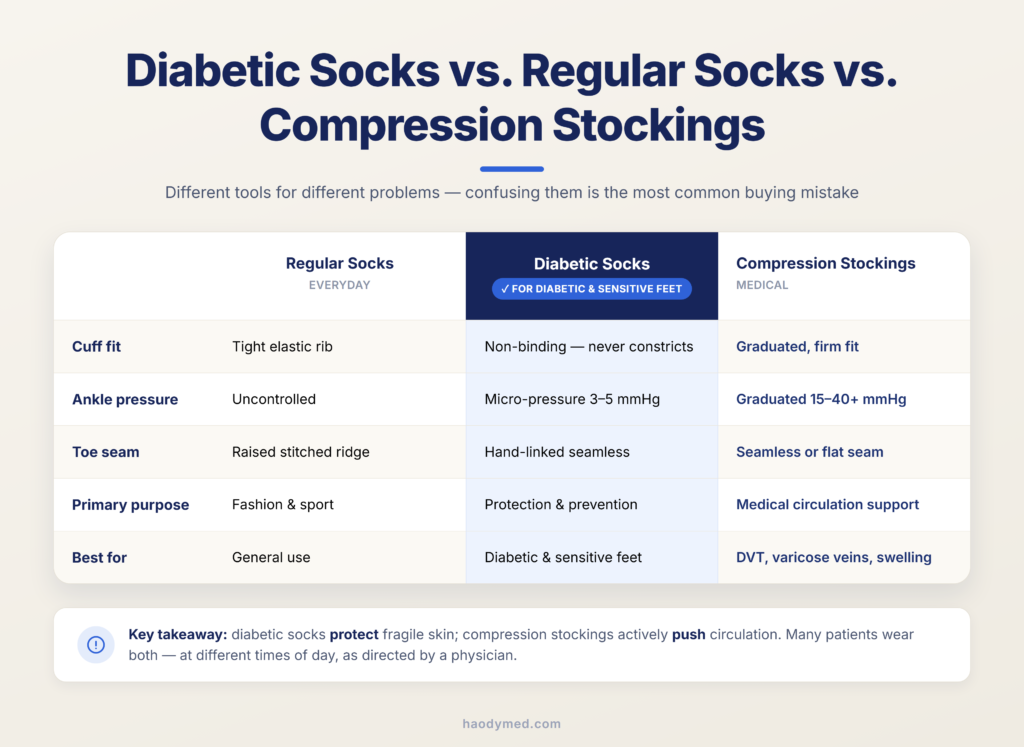
Diabetic Socks vs Regular Socks vs Compression Socks

Three common sock categories. Very different purposes.

Diabetic SocksRegular SocksCompression Socks
Primary purposeMinimize friction, pressure, and moisture for sensitive feetGeneral everyday comfortApply graduated pressure for circulation support and swelling reduction
Cuff fitNon-binding, minimal elasticStandard elasticFirm to snug by design
Toe areaSeamless or flat-linked seamStandard sewn seamVaries by product
Pressure profileGentle, even, non-restrictiveStandardGraduated — firmer at ankle, lighter toward the knee
Moisture managementTypically prioritized in designBasicVaries
Best suited forSensitive or friction-prone feet; daily comfort wearGeneral daily useEdema, venous concerns, long-haul travel, post-surgical recovery

The distinction that matters most:

Diabetic socks and compression socks are not interchangeable. Diabetic socks are designed to reduce restriction and friction. Compression socks are designed to apply deliberate, calibrated pressure for a different purpose entirely. For a detailed breakdown of compression sock types and how to choose between them, see our guide: Knee High vs Thigh High Compression Stockings: How to Choose the Right Length.

A practical note for pregnant women: During pregnancy, UT Southwestern Medical Center advises avoiding socks with a tight band at the top, noting that tight cuffs may worsen lower-leg swelling by blocking blood return. The NHS similarly recommends wearing comfortable, non-constricting socks when feet are swollen. Non-binding diabetic socks can be a practical everyday option in this context — while compression socks, when recommended by a healthcare provider, serve a separate circulation-support purpose. These are two different products addressing two different needs.


How to Evaluate Materials and Marketing Claims

Walk into any pharmacy or browse online, and you’ll find diabetic socks marketed with a long list of material claims: copper-infused, silver-threaded, bamboo fiber, antimicrobial, far-infrared, moisture-activated.

Some of these features have a reasonable design basis. Others are marketing language dressed up as clinical functionality.

A few principles worth keeping in mind before buying:

Fiber type is one factor — not the whole picture. How the yarn is processed, how tightly it is knit, and how the sock is constructed across different zones all affect real-world performance in friction, airflow, moisture handling, and durability. A well-constructed basic cotton diabetic sock can outperform a poorly made bamboo alternative.

Not all specialty-fiber or antimicrobial claims carry strong clinical evidence. The 2026 PubMed Central systematic review noted that functional material claims in the diabetic sock category frequently lack robust clinical validation. Design features — non-binding tops, seamless construction, proper fit — have a more consistent evidence base than many ingredient-driven claims.

Comfort claims and treatment claims are different things. A sock that keeps feet drier and reduces rubbing can genuinely improve day-to-day comfort. A sock that claims to treat a condition or deliver a measurable therapeutic outcome is a different proposition — one that should be evaluated with a higher level of scrutiny.

Bottom line: Prioritize construction and fit before fiber labels.


Who May Benefit Most From Diabetic Socks?

The short answer: more people than the name suggests.

People with diabetes and sensitive feet
This is the core use case the product was designed around. The American Diabetes Association advises people with diabetes to wear well-fitting, moisture-wicking, seam-free socks as part of daily foot care — a description that aligns closely with what diabetic socks are built to provide.

People with peripheral neuropathy
Softer, less structured socks can improve day-to-day comfort for some individuals with neuropathy-related foot sensitivity. Worth noting: socks do not treat neuropathy. According to Healthline’s clinical review, anyone experiencing persistent numbness, tingling, or loss of sensation should seek medical evaluation rather than relying on footwear changes alone.

Pregnant women
During pregnancy, feet and ankles commonly swell as the body retains more fluid — and tight sock bands can make this worse. UT Southwestern Medical Center explicitly recommends avoiding socks with tight bands at the top during pregnancy, as these can worsen swelling and impair blood return in the lower leg. The non-binding, seamless, moisture-managing construction of diabetic socks makes them a practical everyday choice for many pregnant women, regardless of whether they have a diabetes diagnosis.

People prone to blisters or foot friction
Athletes, people who walk extensively in their jobs, and anyone whose feet are prone to rubbing or blistering inside footwear can benefit from the seamless construction and friction-reducing design.

Non-diabetics who simply want a more comfortable sock
The design features that make diabetic socks work — seamless construction, non-binding fit, moisture management — are useful for a broader range of people than the name implies. No diagnosis required.

When socks aren’t enough:

If you or someone you care for experiences numbness, persistent tingling, open sores, skin breakdown, unexplained swelling, or any concern about circulation in the feet or lower legs, do not rely on choosing the right sock as a primary response. These are signs that warrant prompt attention from a medical professional.


How to Choose the Right Pair for Daily Use

The right diabetic sock depends on how and where it will actually be worn. Here’s a practical breakdown:

For everyday home or office wear
Prioritize softness, non-binding fit, and seamless or flat-toe construction. Moderate cushioning is usually sufficient; breathability matters more than insulation in standard indoor conditions.

For warm or humid climates
Moisture management becomes the critical factor. Look for constructions that actively draw moisture away from the skin and dry relatively quickly. Avoid thick terry-loop linings that may retain heat and dampness throughout the day.

For users on their feet for long periods
Zone-specific cushioning in the heel and forefoot areas becomes more important. A sock with reinforced padding in high-impact zones helps reduce the cumulative pressure that builds up during extended standing or walking.

For pregnancy or foot swelling
Non-binding tops are the most critical feature — avoid any sock with a tight elastic cuff. Moisture-wicking, lightweight construction helps manage the additional warmth and perspiration that often accompanies pregnancy. If significant swelling or circulation concerns are present, discuss appropriate options with your doctor.

For cooler environments
A thicker construction adds warmth and comfort, but the sock still needs to fit cleanly inside the shoe without bunching. Added bulk that causes the sock to fold inside footwear creates the exact pressure points the design is meant to avoid.

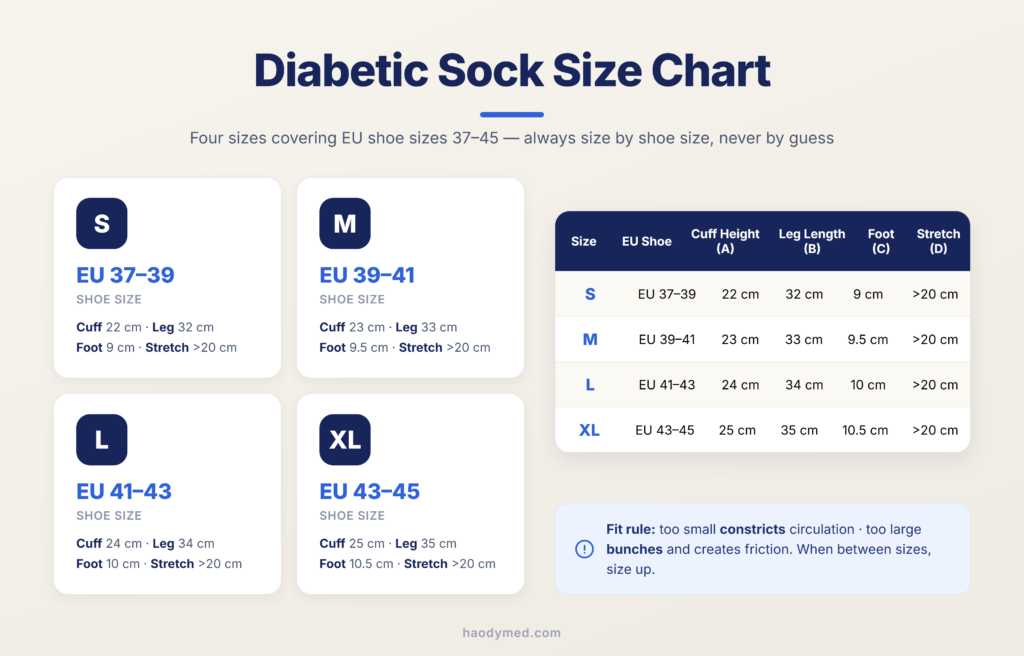
On sizing: Diabetic socks should conform to the foot — snug enough to stay in place without restricting the ankle. Most manufacturers provide sizing guides based on shoe size and foot circumference. When in doubt, reference the brand’s fit chart rather than assuming standard sock sizing translates directly.

Explore Haody Medical’s range of diabetic socks — designed with non-binding construction, seamless toe closure, and zone-specific cushioning for everyday foot care.


For Medical Distributors and Healthcare Retailers: Sourcing Diabetic Socks

Haody Medical manufactures diabetic socks for distributors, healthcare retailers, and institutional buyers worldwide. Our products feature non-binding tops, seamless toe construction, and moisture-wicking fabrics built to consistent quality standards.

We support bulk orders, custom sizing, and private labeling with ISO 13485-certified production.

Contact us to discuss your sourcing requirements →

References

  1. American Diabetes Association. 8 Tips to Protect Your Feet with Diabetes
  2. Healthline. Diabetic Socks: Find the Right Socks for You
  3. Walgreens The Thread. What Are Diabetic Socks?
  4. Fixing Feet Institute. Finding the Best Diabetic Socks (Whether You Have Diabetes or Not)
  5. American Diabetes Association. Standards of Care in Diabetes — 2026 (Published December 2025)
  6. PubMed Central. Diabetic Socks: A Systematic Review of the Literature and Recommendations (Published February 2026)
  7. UT Southwestern Medical Center. 5 Ways to Manage Swollen Legs and Feet During Pregnancy
  8. NHS. Swollen Ankles, Feet and Fingers in Pregnancy

This article was prepared by the Haody Medical content team for general informational purposes. Haody Medical (Suzhou Haody Medical Products Co., Ltd.) is a manufacturer of medical textile products — including diabetic socks, compression stockings, and related foot-care hosiery — with over 15 years of production experience and ISO 13485 quality management certification. This content does not constitute medical advice. Please consult a qualified healthcare professional for any personal health concerns.

Share:

More Posts

Send Us A Message

Ask For A Quick Quote

We will contact you within 1 working day