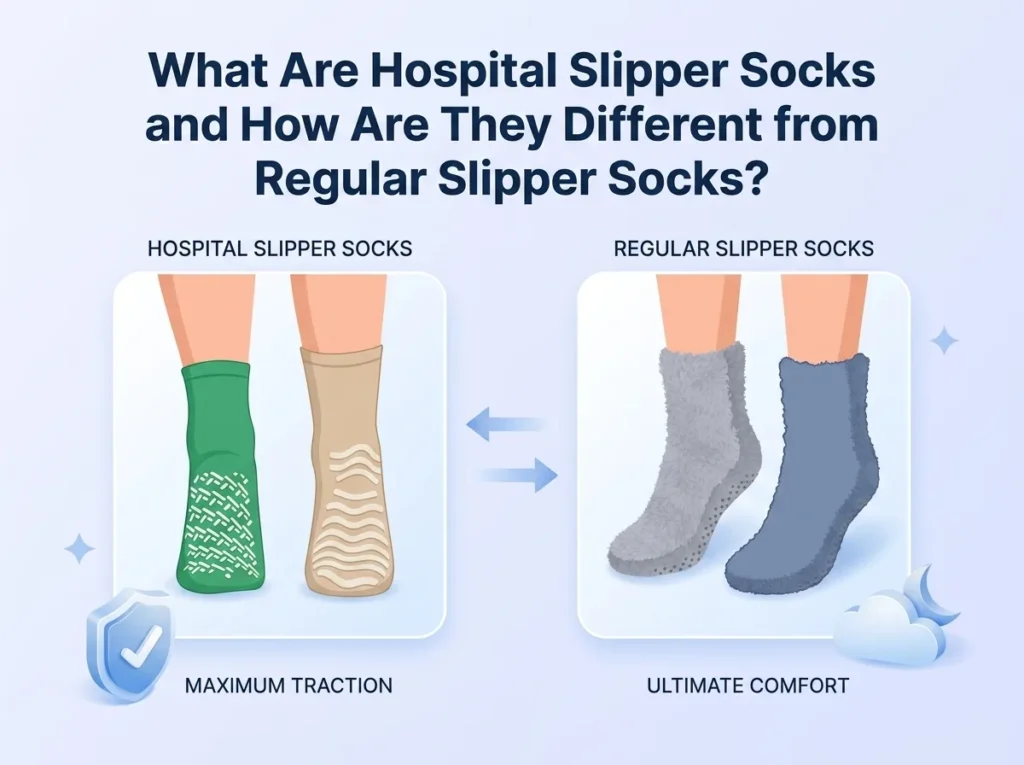
If you’ve ever compared a pair of hospital slipper socks with the fuzzy slippers you wear at home, you’ve probably noticed they don’t feel the same — and they’re not supposed to. Hospital slipper socks are non-slip socks designed for patient use in healthcare settings, while regular slipper socks are mainly made for warmth and casual comfort at home.
This article breaks down what hospital slipper socks actually are, how they differ from regular slipper socks, and what buyers should look for when sourcing them for hospitals, care facilities, or distribution. Whether you’re comparing products for a facility or evaluating suppliers for bulk purchasing, understanding these differences matters more than it might seem at first glance.
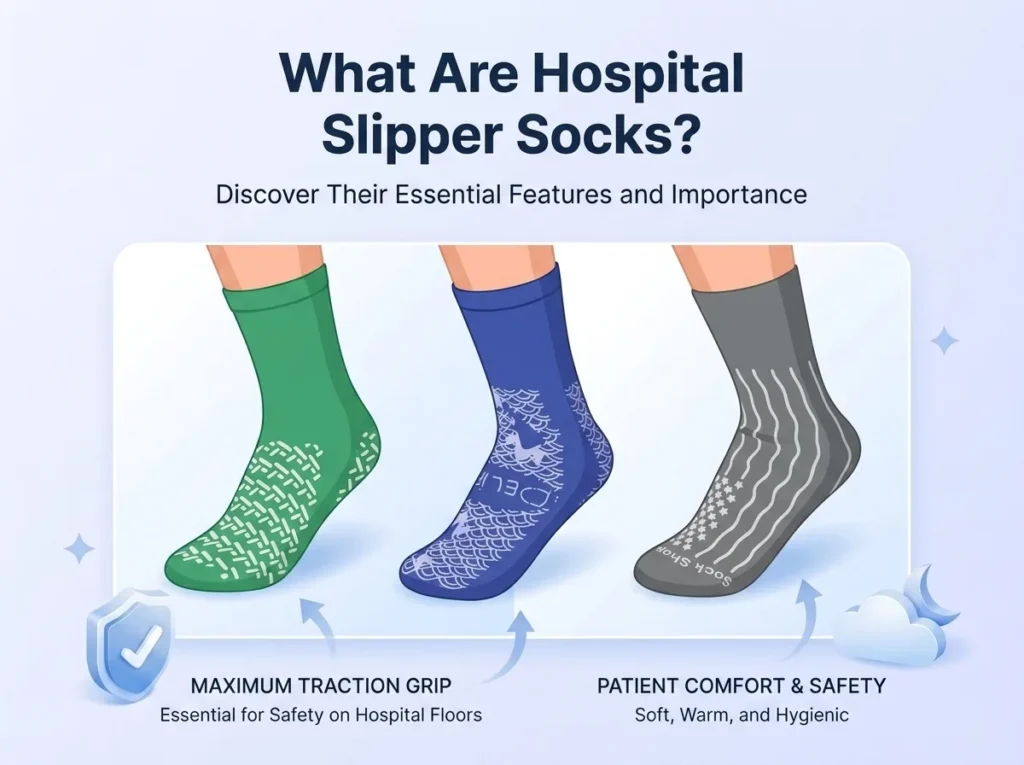
What Are Hospital Slipper Socks?
Hospital slipper socks are a type of non-slip footwear given to patients in hospitals, nursing homes, and rehabilitation centers. Unlike regular socks, they’re built with grip elements on the sole — usually rubberized dots or strips — to help reduce slipping on smooth indoor flooring like tile, vinyl, or polished concrete.
They’re typically issued to patients moving between a bed, bathroom, or hallway, especially during short-term stays where wearing personal footwear isn’t practical. That’s a very different use case from a pair of slippers you’d wear around the house on a Sunday morning.
The design priorities also reflect this. Hospital slipper socks focus on functional grip, easy sizing, and consistent quality across large quantities, rather than on style or seasonal comfort trends.
Hospital Slipper Socks vs Regular Slipper Socks: The Biggest Differences
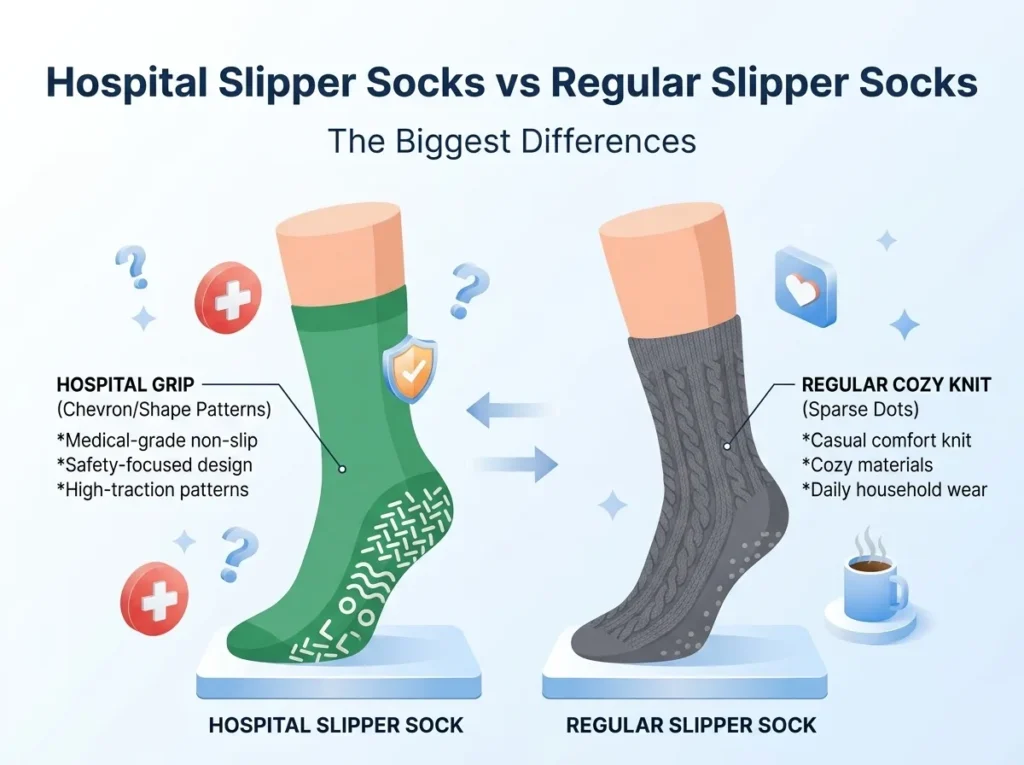
At a glance, both products might look similar — soft socks with some kind of grip on the bottom. But once you look closer, the differences show up in almost every part of the design.
Intended use. Regular slipper socks are made for personal, everyday comfort at home. Hospital slipper socks are made for institutional use, where consistency, hygiene, and safety take priority over style.
Grip design. Home slipper socks often have decorative or partial grip patterns. Hospital slipper socks are engineered with more consistent tread coverage, since they need to perform reliably on hospital flooring, not just carpet.
Material focus. Regular slipper socks are often built around softness and warmth first. Hospital slipper socks balance comfort with durability, since they may be worn for extended periods and need to hold up under frequent laundering in institutional settings.
Fit and sizing. Home products usually follow standard retail sizing. Hospital slipper socks are typically designed with a simpler, broader sizing system so staff can quickly match sizes across large patient populations.
Distribution context. Regular slipper socks are sold individually through retail channels. Hospital slipper socks are usually sourced in bulk by hospitals, care facilities, or distributors, which changes how they’re packaged, labeled, and supplied.
Key Features of Hospital Slipper Socks
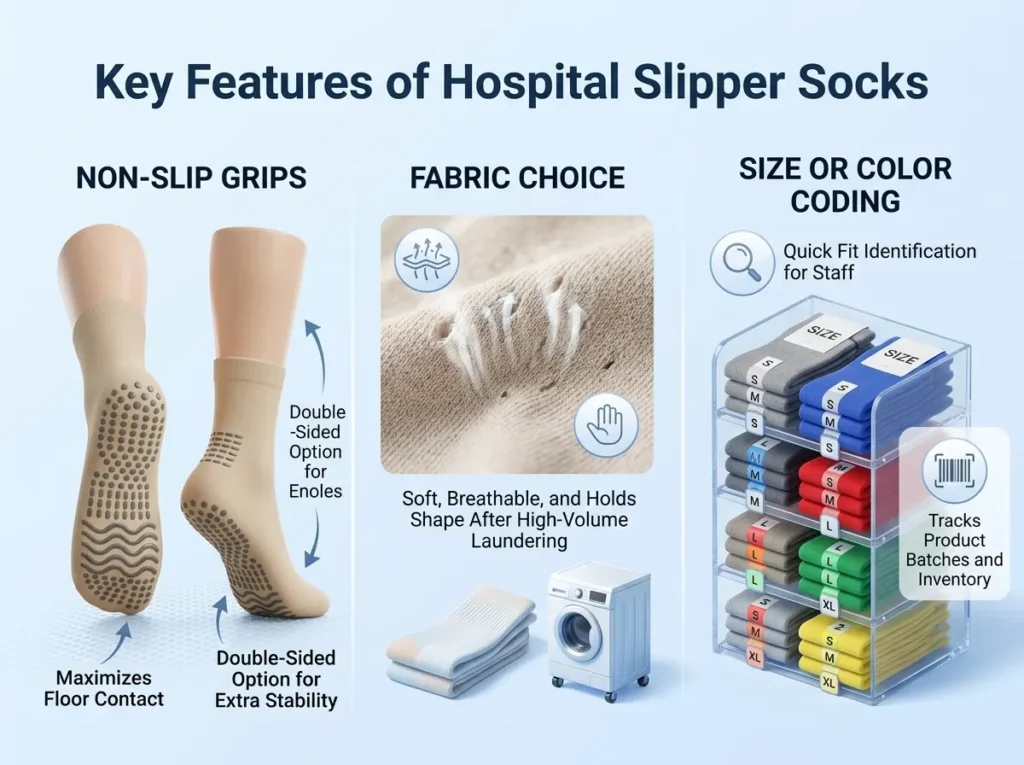
A few features consistently show up across hospital slipper sock products, and they’re worth understanding if you’re evaluating options.
Non-slip grips are the most obvious one — usually placed on the sole in a pattern designed to maximize contact with the floor. Some designs use single-sided grips (bottom only), while others use double-sided grips for extra stability during transfers or short walks.
Fabric choice also matters. Most hospital slipper socks use a soft, breathable knit that’s comfortable for extended wear but still holds its shape after repeated washing — a practical requirement in any facility doing high-volume laundering.
Many products also use visible sizing or color coding, which helps staff quickly identify the right fit or track specific product batches, especially in facilities that manage large inventories.
Where Hospital Slipper Socks Are Commonly Used
Hospital slipper socks show up most often in general hospital wards, where patients need basic mobility support between their bed and nearby areas. They’re also widely used in nursing homes and elderly care facilities, where fall prevention and ease of movement are ongoing concerns.
Rehabilitation centers and post-surgery recovery units use them too, often for patients who are regaining mobility and need reliable footwear during physical therapy sessions or short walks. Each of these settings has slightly different priorities — a rehab center may care more about grip during active movement, while a long-term care facility may focus more on comfort for extended daily wear.
Are Hospital Slipper Socks the Same as Grip Socks or Non-Slip Socks?
Not exactly, and this is where a lot of confusion comes from. The terms overlap in general use, but they’re not always describing the exact same product.
“Grip socks” is often a broader consumer term used for anything from yoga socks to home safety socks. “Non-slip socks” is a similarly generic label that can apply to both retail and medical products. “Hospital slipper socks” specifically refers to the version designed and supplied for healthcare environments — meaning it’s built for institutional use, bulk supply, and consistent quality across large orders, not just individual retail sales.
For buyers, this distinction matters because product naming affects sourcing. A supplier that only sells consumer-grade “grip socks” may not have the manufacturing consistency or bulk capacity that a hospital or distributor actually needs.
What Double-Sided Grip and Tread Coverage Really Mean
This is one detail that often gets mentioned but rarely explained clearly. Single-sided grip means the non-slip pattern only covers the bottom of the foot — the most basic and common design. Double-sided grip adds tread to both the sole and sometimes the sides, offering more stability during transfers, turns, or short unsteady movements.
Tread coverage also varies. Some products use a partial pattern focused on the heel and forefoot, while others use full coverage across the entire sole. Full coverage generally provides more consistent contact with the floor, which can matter more in higher-mobility settings like rehab units compared to a general ward where patients are mostly resting in bed.
For buyers, this isn’t just a technical detail — it’s a practical decision point. Facilities with more patient movement may prioritize full tread coverage, while general wards may find single-sided grip sufficient for basic safety needs.
Why Size Coding, Color Coding, and Packaging Matter in Healthcare Use
In a retail setting, packaging is mostly about branding. In a healthcare setting, it’s about logistics. Hospitals and care facilities often manage hundreds of pairs at once, which makes size coding and color coding genuinely useful — not just a nice-to-have feature.
Color-coded sizing allows staff to quickly identify the right pair without checking a label every time, which matters in fast-paced ward environments. Bulk packaging formats — such as pre-counted case packs or individually sealed pairs — also affect how easily a facility can restock, track inventory, and maintain hygiene standards between uses.
For distributors and institutional buyers, these details often influence purchasing decisions as much as the product itself, since they directly affect day-to-day handling and supply consistency.
What B2B Buyers Should Check Before Sourcing Hospital Slipper Socks
If you’re sourcing hospital slipper socks for a facility, distribution channel, or private label program, a few factors are worth checking beyond basic comfort and price.
Material composition affects both comfort and durability, especially under frequent washing. Grip pattern options — single-sided versus double-sided, partial versus full tread — should match your intended use case. Size range matters too, particularly if you’re supplying a facility with a wide patient population.
For buyers considering private label or OEM production, it’s also worth confirming a supplier’s capacity for custom colors, branding, or packaging formats, along with their ability to maintain consistent quality across large production runs. These are the kinds of details that don’t always show up in a basic product listing but make a real difference in long-term sourcing relationships.
How to Choose the Right Hospital Slipper Socks for Different Applications
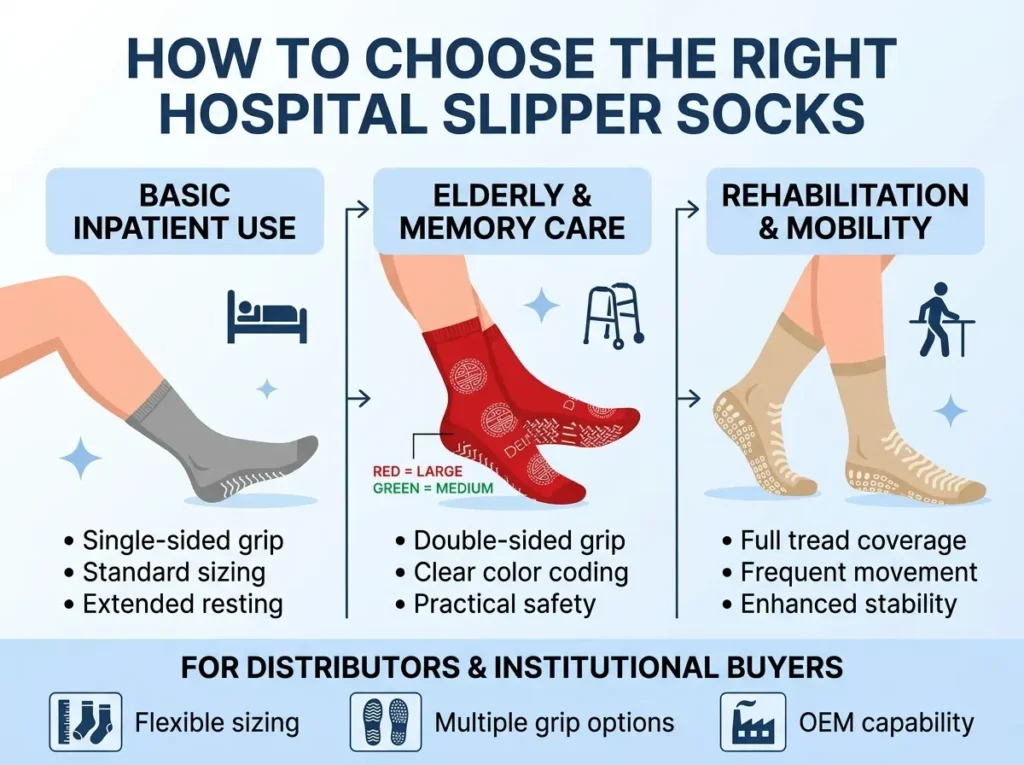
For basic inpatient use, single-sided grip with standard sizing is usually sufficient, since most patients are resting for extended periods. For elderly care or memory care settings, double-sided grip and clear color coding can add an extra layer of practical safety and ease of use for staff.
Rehabilitation or higher-mobility settings often benefit from full tread coverage, given the more frequent movement involved. For distributors or institutional buyers managing multiple facility types, working with a supplier that offers flexible sizing, grip options, and OEM capability makes it easier to serve different customer needs without switching vendors for every product variation.
Final Thoughts
Hospital slipper socks and regular slipper socks might look similar at first, but they’re built for very different purposes. One is designed around home comfort, while the other is engineered for safety, consistency, and institutional use.
If you’re evaluating hospital slipper socks for a facility, distribution program, or private label line, understanding these design and sourcing details can help you make a more informed decision — and avoid the kinds of ambiguities that often surface only after a bulk order is already placed. For buyers exploring specifications, samples, or OEM options, working directly with a manufacturer familiar with these details is usually the most efficient starting point.
About the Author
This article was written by the content team at Haody Medical, a manufacturer specializing in medical textiles and healthcare support products. Founded in 2008 in Suzhou, China, Haody Medical operates under an ISO 13485 quality management system and produces over 2,000 tons of cotton and polyester medical products annually, including hospital slipper socks, diabetic socks, compression stockings, and related healthcare textiles for global distributors and institutional buyers.
Disclaimer
This article is intended for general product and sourcing information only. It does not constitute medical advice. Facilities and buyers should evaluate product suitability based on their own safety protocols, patient needs, and applicable healthcare regulations.