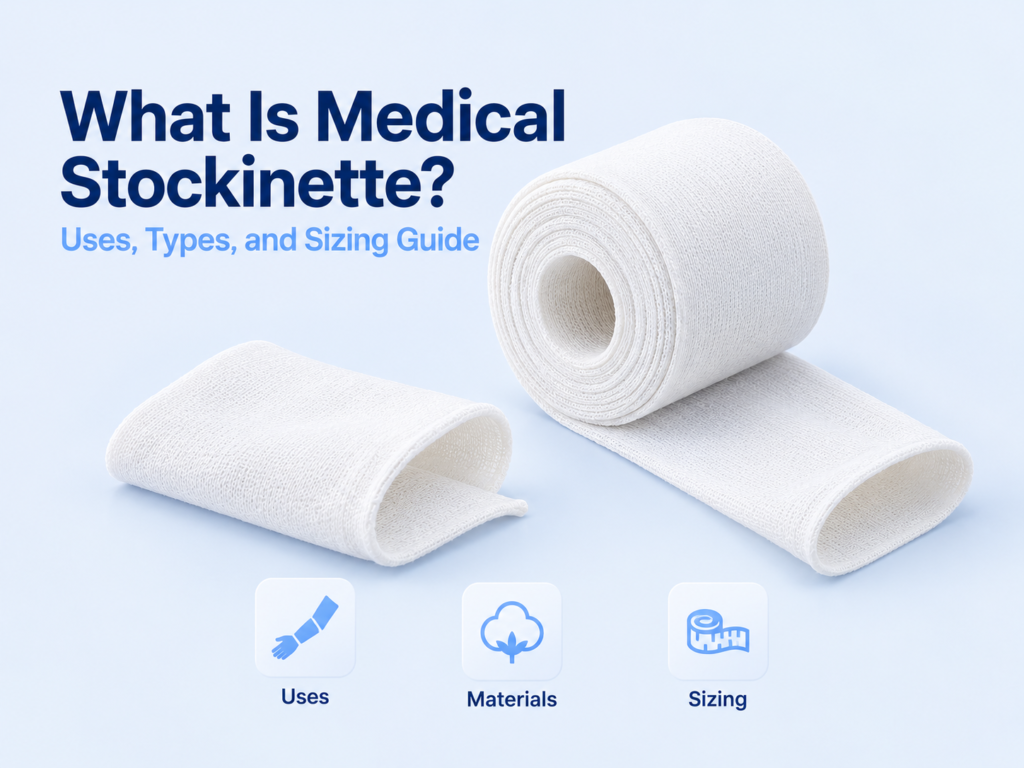
Medical stockinette is a seamless tubular knit fabric used as a lining or limb covering in orthopedic and surgical settings. It sits between the skin and a cast, splint, orthosis or bandaging system, or it covers a limb during certain procedures.
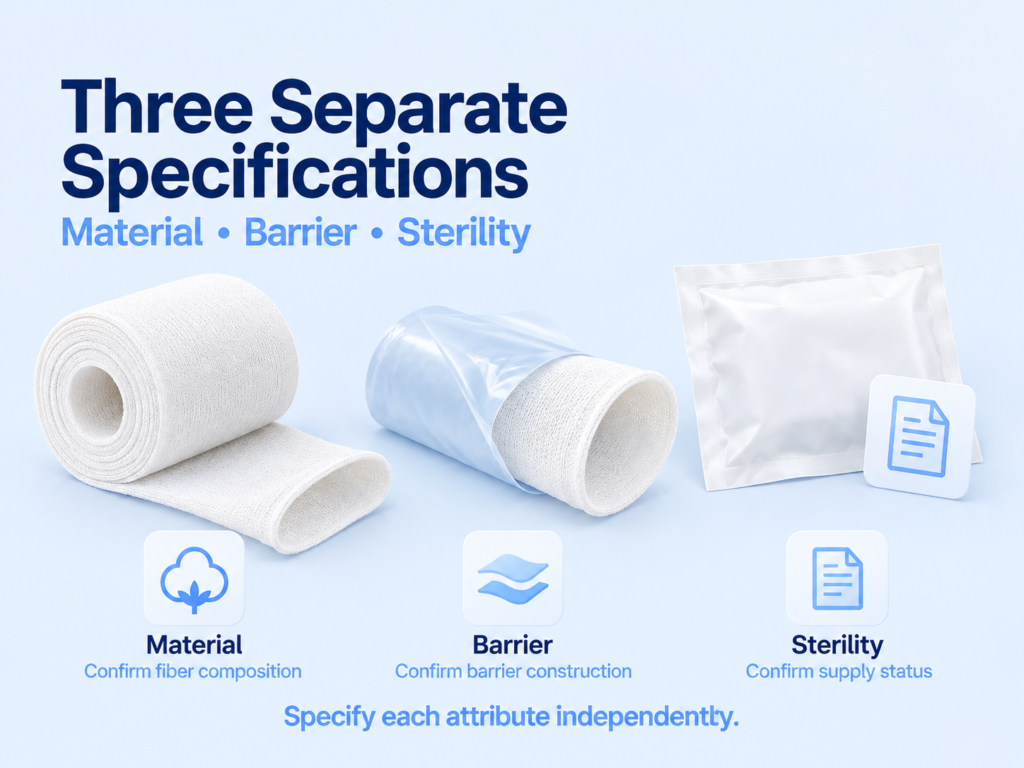
Here’s the catch: not every stockinette is built for the same job. Material, barrier construction and sterility are three separate choices, and treating them as one is the most common way a purchase order goes wrong.
This guide covers what stockinette is, what it’s used for, how the main types differ, how to read sizes, and what to specify before you place a bulk order.
What Is Medical Stockinette?
Medical stockinette is a tube of knitted fabric, usually supplied as a roll that is cut to length or as pre-cut pieces. The knit structure gives it stretch, so the tube can be drawn over a limb and then sit smoothly against the skin.
You’ll see it called tubular stockinette, and in orthopedic catalogs often undercast stockinette, because it goes under a cast. You’ll also see the shorter spelling “stockinet.” It’s the same product family.
Two cautions before we go further. Not all stockinette is 100% cotton. Not all of it is sterile. And it doesn’t automatically apply therapeutic pressure or touch an open wound. What a specific product is designed for depends on its construction and its labeling.
What Is Medical Stockinette Used For?
Most products fall into three use cases.
Under Casts and Splints
The most familiar use is as a skin-side liner beneath a cast or splint. The fabric creates a smooth interface between the skin and the outer materials. Exactly how it should be used depends on the fixation system’s instructions, so this article won’t walk through applying a cast. That belongs to trained clinicians.
Under Orthoses and Certain Bandaging Systems
Stockinette is also used as an interface layer under braces, orthoses and some bandaging systems. Be careful with wording here. A stockinette used inside a compression bandaging system is not the same as a stockinette that provides therapeutic compression. Unless the product label says otherwise, assume a plain liner doesn’t deliver treatment pressure.
Surgical Limb Coverage
Some stockinette products are designed to cover a limb during surgery. These are typically a different construction from a plain roll liner, often with a fluid-barrier layer. Whether the product must also be sterile is a separate question, which we cover in the next section. A standard roll liner shouldn’t be treated as a surgical covering by default.
Medical Stockinette Types: Materials, Barrier Construction, and Sterility
Most product pages mix three different ideas together. Pull them apart and specifications get much easier to write.
Cotton and Synthetic Stockinette
Cotton and synthetic fibers such as polyester are the two material families you’ll see most. Cotton is a familiar choice for skin-contact liners. Synthetic knits are offered by some suppliers for different handling and performance needs.
Avoid tidy rules like “cotton is for plaster, synthetic is for fiberglass.” Real product choice depends on the intended use, the fixation system and the manufacturer’s guidance. The fiber name alone won’t tell you how the finished product behaves.
What Makes a Stockinette Impervious?
An impervious stockinette includes a dedicated fluid-barrier layer, typically part of a composite construction with a knit lining. The exact lining and film depend on the manufacturer, so always ask for the product specification.
“Impervious” describes a barrier design for a specific purpose. It doesn’t mean the product is a bath cover or suitable for immersion.
Material, Barrier Construction, and Sterility: Three Separate Decisions
Think of these as three independent dropdown menus on your RFQ:
| Dimension | What to confirm | What not to assume |
|---|---|---|
| Material | Fiber composition and knit construction | A fiber name defines every performance property |
| Barrier construction | Whether a validated fluid-barrier layer is included | Synthetic means waterproof |
| Sterility | Sterile or non-sterile supply status, plus supporting documentation | Impervious means sterile |
The three can be combined. One product might have a synthetic lining and a barrier layer and be supplied non-sterile. Another might be a plain cotton roll. They aren’t three mutually exclusive product categories.
Here’s why this matters: a buyer who writes only “medical stockinette” on an inquiry leaves the supplier to guess all three. You’ll get quotes for different products, and they won’t be comparable.
Stockinette vs. Cast Padding vs. Tubular Bandage
These products get mixed up because catalogs use the words loosely. Here’s a simple way to tell them apart:
| Product | Structure / form | Typical role | Confirm before buying |
|---|---|---|---|
| Stockinette | Seamless knitted tube | Skin-side liner or limb covering | Material, barrier, sterility, size |
| Cast padding | Wrapped padding material, often in rolls | Cushioning layer under a cast | Fiber type, width, intended fixation system |
| Tubular bandage | Tubular knit or elastic bandage | Retention, support or dressing hold | Elasticity, application, size range |
| Tubular net bandage | Open-mesh tubular structure | Holding dressings in place | Mesh stretch, size, application area |
Names overlap between suppliers, so check the intended use and the construction, not just the product title. And don’t treat plain stockinette as a universal replacement for cast padding. They do different jobs.
If you want to go deeper on the tube-shaped alternatives, see our guide to tubular bandage uses and types and the comparison of tubular bandage vs. tubular net bandage.
How to Read Stockinette Sizes and Choose the Right Fit
Size is where many first-time buyers get tripped up.
Flat Width Is Not Diameter
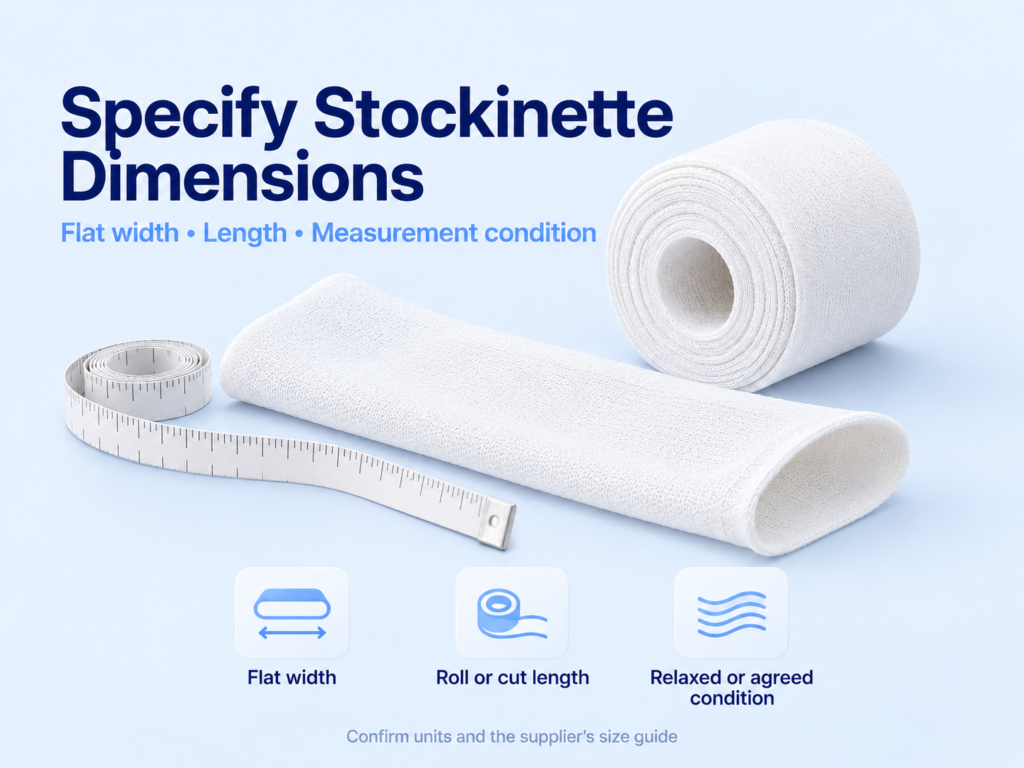
Suppliers usually list stockinette by flat width, meaning the width of the tube when it’s laid flat. For a simple tubular fabric in a relaxed, unstretched state, the circumference is roughly twice the flat width.、
That’s a geometry rule of thumb, not a clinical fitting formula. It doesn’t tell you what limb circumference a product suits, because stretch, knit structure and design all change how the fabric performs on a real limb.
State the Measurement Condition
Always ask how a size was measured. A width listed unstretched and a width listed under tension are two different numbers. Agree on the measurement condition with your supplier, and don’t treat maximum stretch as the comfortable working range.
Use the Actual Supplier Size Guide
Pick sizes from the specific product’s size chart, its intended use and an approved sample. Be wary of generic charts that say a certain inch size fits “all adults.” Those tables rarely account for the product’s actual knit and stretch.
If you’re building your own spec sheet, use fields like these:
- Flat width and unit
- Roll length or pre-cut length and unit
- Measurement condition (relaxed or an agreed method)
- Tolerance agreed with the supplier
- Intended body area or application
How to Compare Stockinette Quotes on the Same Basis
Two quotes for “the same” stockinette often aren’t. Before you look at a price, confirm that both offers match on material, width, construction, sterility, packaging and trade terms. Only then normalize for length.
One trap comes up all the time. 25 yards is 22.86 metres, not 25 metres. A roll listed in yards and a roll listed in metres are not the same amount of fabric.
The formula is simple:
Price per metre = Price per roll ÷ Roll length in metres
Here’s a made-up example. These are hypothetical numbers for illustration, not Haody prices or market rates.
| Illustrative quotation | Roll length | Hypothetical price | Approx. price per metre |
|---|---|---|---|
| A | 25 yd / 22.86 m | USD 10.00 | USD 0.437/m |
| B | 25 m | USD 10.50 | USD 0.420/m |
Quote A looks cheaper per roll. Quote B is cheaper per metre. That’s the whole point: a lower roll price doesn’t always mean a lower cost per unit of fabric, provided the two products are truly equivalent.
Two limits on this method. Price per metre says nothing about quality, so it can’t be your only criterion. And for sterile or pre-cut products, compare price per compliant finished piece or pack instead of applying the roll formula.
What Buyers Should Specify and Check Before Bulk Ordering
Build a Clear Stockinette RFQ
A complete inquiry saves rounds of back-and-forth. Copy this table into your next request:
| RFQ field | Buyer input / supplier confirmation |
|---|---|
| Intended use | [Specify application] |
| Material and construction | [Specify or request options] |
| Barrier requirement | [Required / not required; applicable evidence] |
| Dimensions and units | [Flat width; roll or cut length; measurement condition] |
| Sterility | [Sterile / non-sterile, as required] |
| Supply format | [Roll / pre-cut / pre-rolled, if available] |
| Packaging and labeling | [Unit pack, quantity, language, lot identification] |
| Quantity and destination | [Order quantity; destination market] |
From Approved Sample to Bulk Delivery: What Should Stay Consistent?
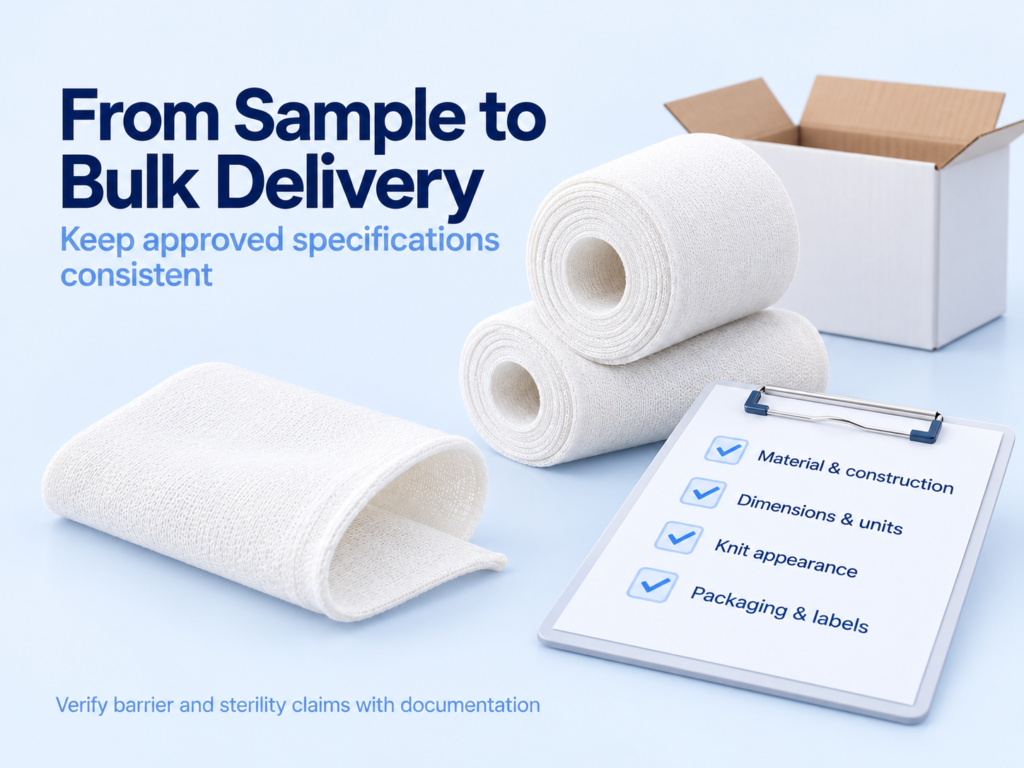
“Request a sample” is standard advice. The harder part is knowing what to compare when the bulk shipment arrives. Use a checklist like this one:
| Checkpoint | What to record | Supporting information | When to verify |
|---|---|---|---|
| Material / construction | Agreed composition and structure | Supplier specification | Sample approval and change review |
| Dimensions | Width, length, units, measurement condition | Agreed method and tolerances | Sample and agreed incoming checks |
| Surface / knit | Visible defects and agreed appearance | Approved reference sample | Sample and incoming visual checks |
| Stretch / recovery, where relevant | Agreed evaluation conditions | Applicable method or test record | Sample approval; risk-based batch checks |
| Barrier / sterility claims | Required property and supply status | Relevant validated documentation | Before approval and when changes occur |
| Packaging / labels | Pack count, product identity, lot markings | Approved artwork / packing specification | Pre-shipment or incoming checks |
A few practical points:
- Photos, hand feel and a quick visual check can’t prove sterility or barrier performance. Those need the right documentation.
- Tolerances, test methods and acceptance criteria should be agreed by both sides in writing.
- Keep the approved sample and the specification version on file, along with a record of any change.
Frequently Asked Questions
Is medical stockinette the same as a compression bandage?
Not by default. Terms overlap across catalogs, but a plain liner shouldn’t be assumed to provide therapeutic compression. Check the specific design and label.
Is cotton stockinette waterproof?
You can’t tell from the fiber name alone. Waterproofing depends on construction, such as a dedicated barrier layer, and on the product’s intended use.
Is all medical stockinette sterile?
No. Products are supplied both sterile and non-sterile. Look at the label and the accompanying documentation for the exact product.
Can stockinette replace cast padding?
They serve different roles. Follow the instructions of the specific fixation system, and don’t treat one as a universal substitute for the other.
What information should I send when requesting a quotation?
Send the intended use, material and construction, dimensions with units, sterility requirement, packaging, quantity and destination market. The RFQ table above covers the details.
Ready to Specify Your Stockinette?
Looking for a supplier? Browse Haody’s cotton and impervious stockinette options, then send us your intended use, sizes and packaging needs so we can confirm which specifications are available.
You can also contact us right here.